
Your Data Center's Hardest Problem Isn't Detection. It's Coordination.
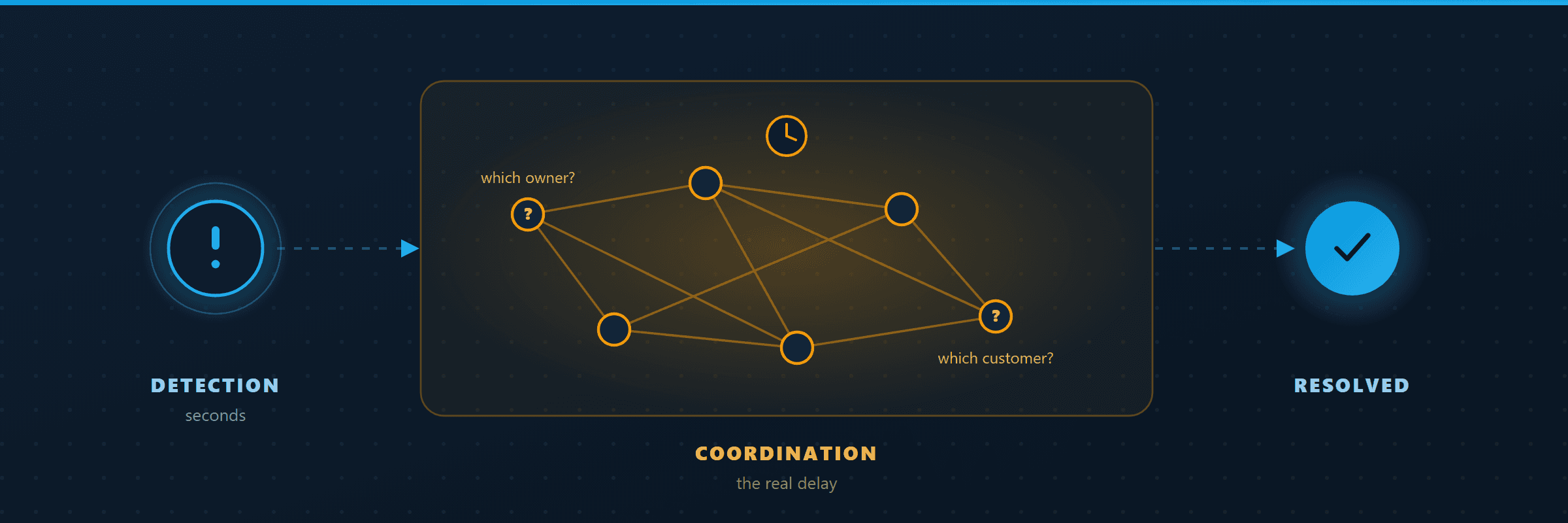
When an incident hits, your monitoring already knows. The real delay is everything that happens next: finding the affected customer, the right owner, the correct procedure, the required approval. ProDCIM AI Employee is built to close that gap.
The alarm was never the problem.
At three in the morning, a rack in a shared hall starts logging power events. Monitoring catches it in seconds. That part works. The hard part is everything that happens after the alert lands: which customer sits behind that rack, what their service agreement promises, who owns the investigation on this shift, which procedure applies, whether the fix needs sign-off, and who is supposed to reach the customer before they notice themselves.
All of that knowledge exists. It is simply scattered, across people, email threads, a ticketing system, a billing platform, and procedures that live half in a wiki and half in someone's memory. So every incident becomes a small reconstruction project, run under pressure by whoever happens to be awake.
That reconstruction, not the detection, is the real cost of operating a data center. It is the gap we built ProDCIM AI Employee to close.
Monitoring sees alarms. Chatbots see documents. Neither sees your company.
Two categories of software already touch this problem, and both stop short.
Monitoring and DCIM platforms see the physical plant. They know a breaker tripped or an inlet is running warm. What they do not know is that the breaker feeds a specific customer, that the customer has a tight response commitment, or that the last three times this happened the root cause was a failing transfer switch.
General-purpose AI assistants see the opposite half. They can search your documents and summarize a thread. What they cannot do is connect that conversation to the rack behind it, the alarm underneath it, or the approval that has to happen before anyone acts.
The knowledge required to run the site lives in the space between those two views, in the relationships. ProDCIM AI Employee is designed to hold both halves at once: the live state of the infrastructure, and the organization that operates it.
A participant in the work, not another chat window
Most AI tools ask your team to stop what they are doing and open a separate window. ProDCIM AI Employee is designed to work the way your organization already works.
It gets its own company identity. You can email it, CC it into an existing customer or internal thread, mention it in Slack or Microsoft Teams, or assign it a ticket in Jira or BMC Helix, the same way you would include another colleague. When it is brought into an authorized conversation, it reads the thread, identifies the customer, service and people involved, retrieves the relevant context, and works out the appropriate next step.
As it participates, it builds something a document search never can: a continuously updated, permission-aware model of how your organization actually operates. Who owns what. How incidents escalate. Which approvals are required. How work moves between operations, facilities, support, billing, finance and management. Just as important, it learns knowledge, not uncontrolled behavior. It updates a private organizational model rather than retraining a public one, and material changes can require human review before they become trusted procedure.
From a customer email to a resolved incident
Take that three a.m. incident again, this time with the AI employee in the loop.
A customer emails support about repeated interruptions and the team CCs ProDCIM. It identifies the customer, the service, and the reported time of impact. It connects that service to the racks, circuits and network paths behind it, then reviews the current and historical alarms, telemetry and maintenance records. It opens an incident, assigns the responsible team, and attaches the evidence. It keeps support and the account manager informed, follows the outstanding tasks, and escalates delays according to your policy. When the investigation points to a possible service-level breach, it compares the event against the customer's authorized terms and prepares a proposed service credit, then routes it to an authorized approver rather than issuing it. After resolution, it updates the ticket, drafts the customer response, records the root cause, and adds the outcome to the company's knowledge.
The next similar incident begins with everything the organization learned from this one.
Authority you grant, not authority it assumes
An AI that can touch customers, infrastructure and money has to be governed, not trusted by default. So participation is graduated. ProDCIM AI Employee can be set to observe, to answer, to recommend, to prepare a draft, to request approval, to execute an approved action, and to verify the result, and you decide where on that ladder each kind of work sits.
High-impact actions, infrastructure shutdowns, customer-facing commitments, financial changes and access modifications, can always require explicit human approval. Every request, the evidence it retrieved, the recommendation it made, the approval it received and the action it took is recorded for audit. Access is permission-aware end to end: knowledge from a restricted finance conversation does not become visible to an operations user, and important answers can show the exact records they were built from.
This is the same posture as the rest of the platform. ProDCIM is SOC 2 Type II Compliant, deployable on-premises, at the edge, or in a secure cloud, air-gap ready, and able to run sensitive AI processing entirely inside infrastructure you control. It is designed for sovereign AI: your operational data, your model, your boundary. The AI Employee extends that platform rather than replacing it, drawing on the same infrastructure, asset and monitoring context you already run.
Start with one workflow
A company brain is not something you switch on across the whole organization on day one. The right way to begin is with a single workflow that crosses two or more systems or departments and has a clear, measurable outcome. Customer incident coordination is an effective first deployment. We map the participants, systems, permissions and approvals, put the AI employee into that one workflow, validate it, and expand from there.
ProDCIM AI Employee is entering private preview now. If your operation loses more time to coordinating incidents than to detecting them, and most do, it is built for exactly that gap.
Integration and action availability may vary by deployment and system configuration.
See it on your own racks
Book a walkthrough mapped to your environment: monitoring, asset management and out-of-band resilience across every site.
More insights
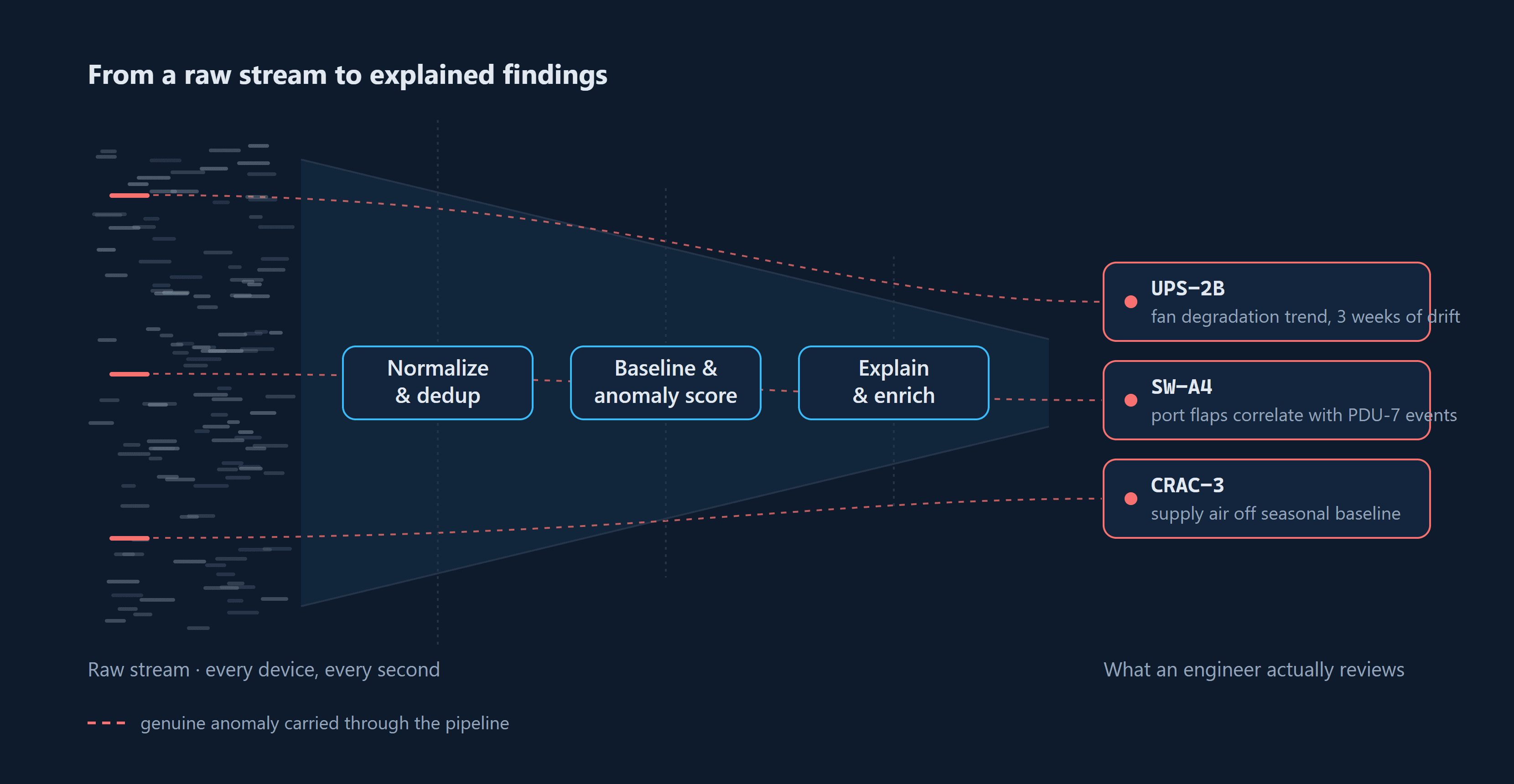
From Noise to Truth: How AI Turns Device Logs into Trusted Operational Intelligence
Device logs are the most underused asset in infrastructure operations: written once, read never, and yet the first place every failure announces itself. AI changes that equation. Anomalies surface themselves, cryptic vendor errors arrive translated, and the record becomes strong enough to stand in an audit. Here is how noise becomes truth.
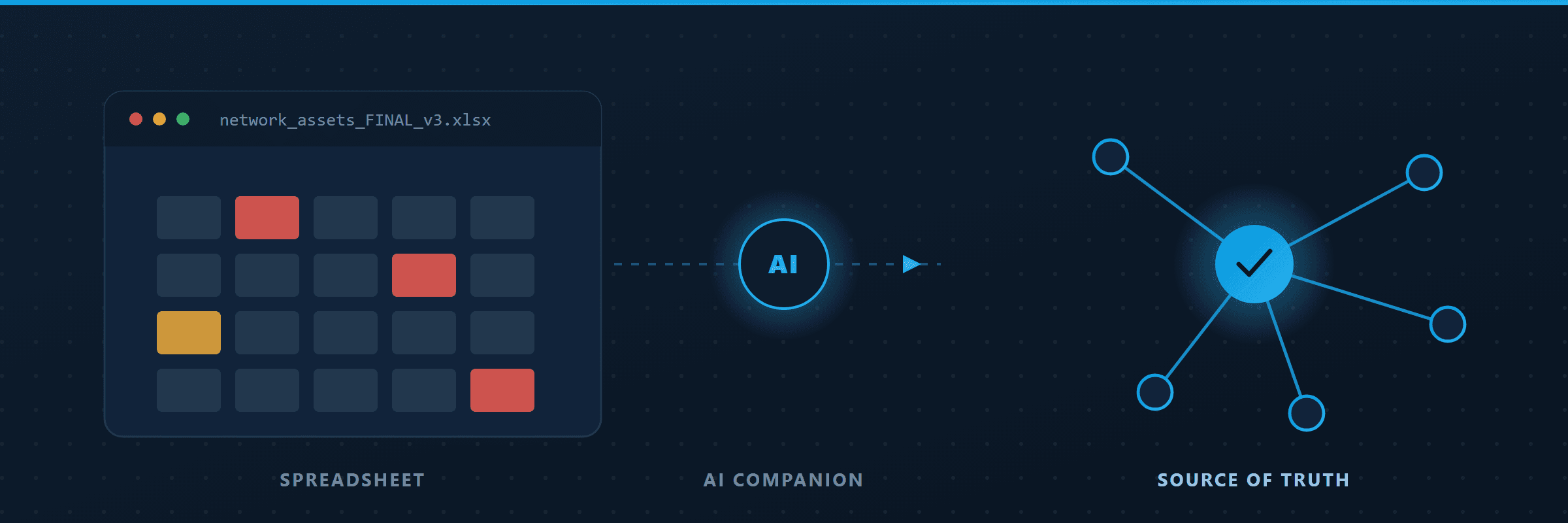
Excel for Your Server Room Is Painful, But a Traditional CMDB Can Hurt More
Your server room probably runs on network_assets_FINAL_v3.xlsx. It works until it does not, and a traditional CMDB can hurt more. Here is why that trade-off finally breaks in the AI era, and what to do instead.
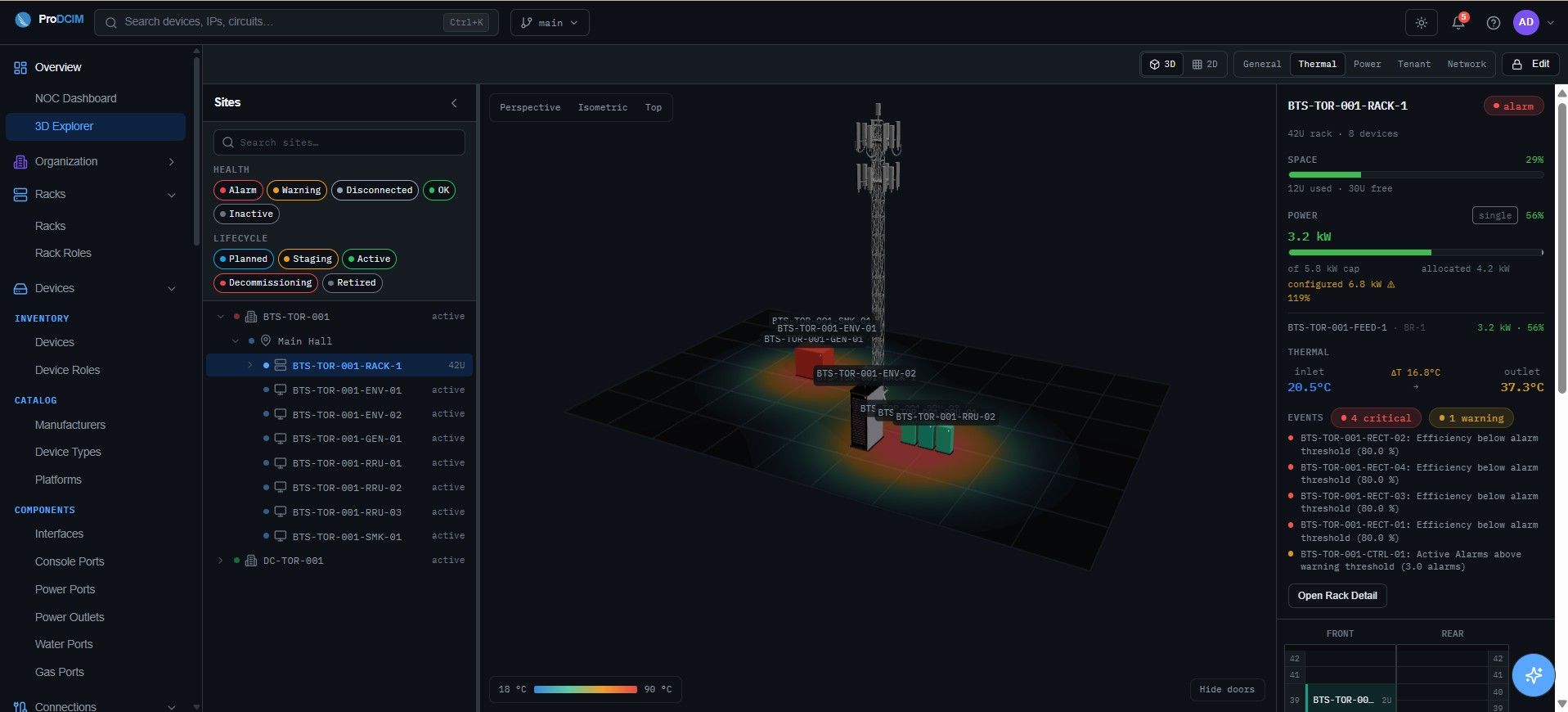
Introducing the New Prochista: A New Website and Next-Generation Platform
We've unveiled a brand-new website and the next generation of our software interface, and we're kicking off a weekly deep dive into the Prochista platform, from hardware monitoring to remote-site resiliency.