
Introducing the New Prochista: A New Website and Next-Generation Platform
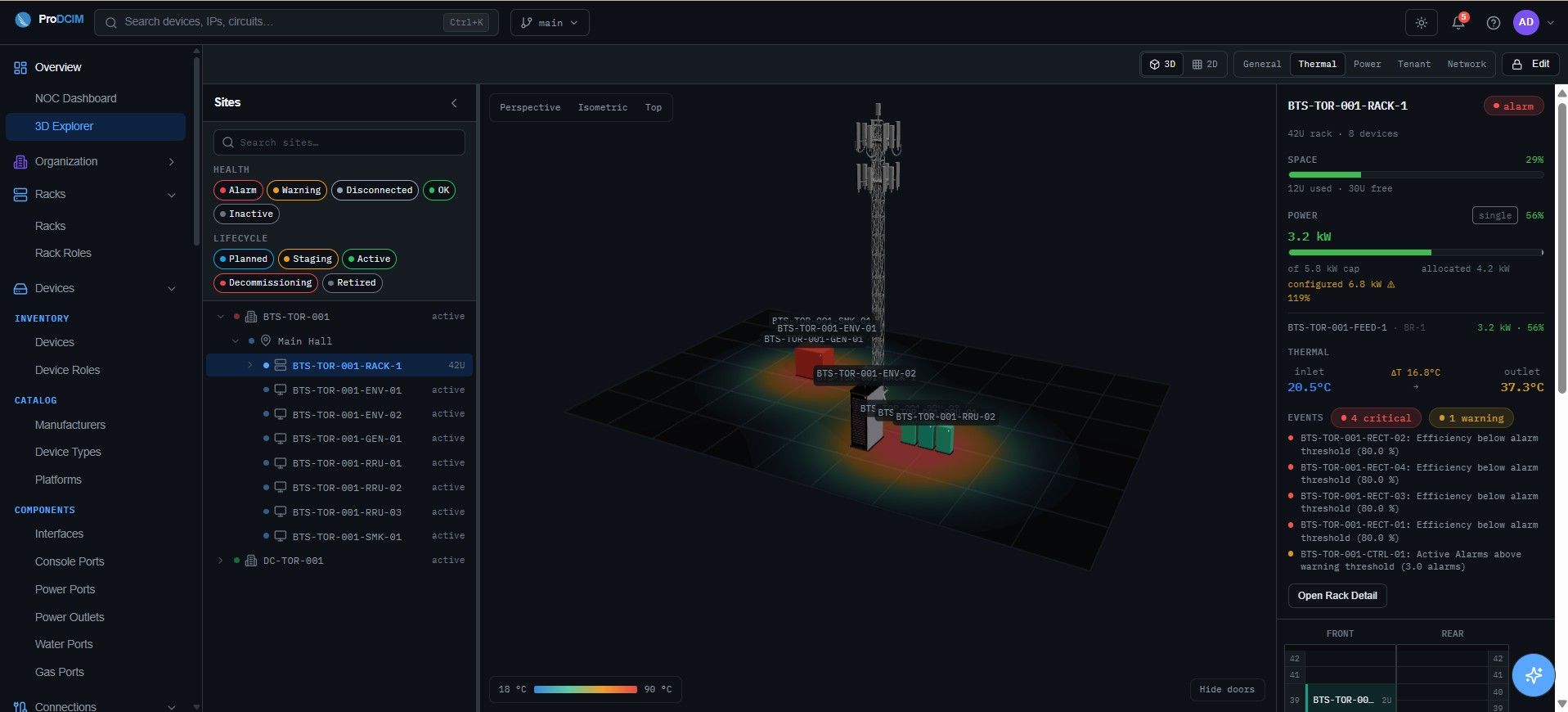
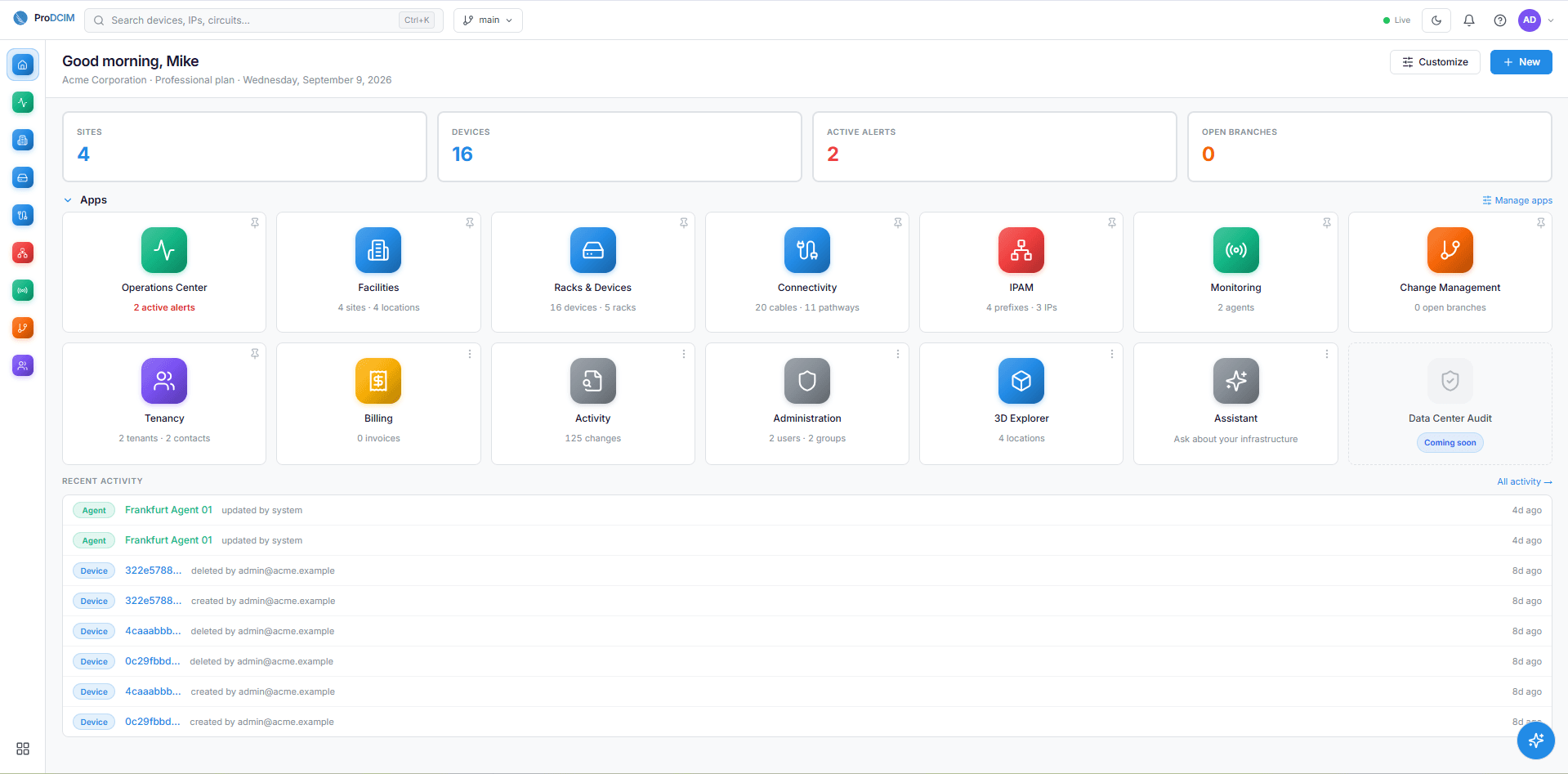
We've unveiled a brand-new website and the next generation of our software interface, and we're kicking off a weekly deep dive into the Prochista platform, from hardware monitoring to remote-site resiliency.
 Featured
Latest articles
17 articles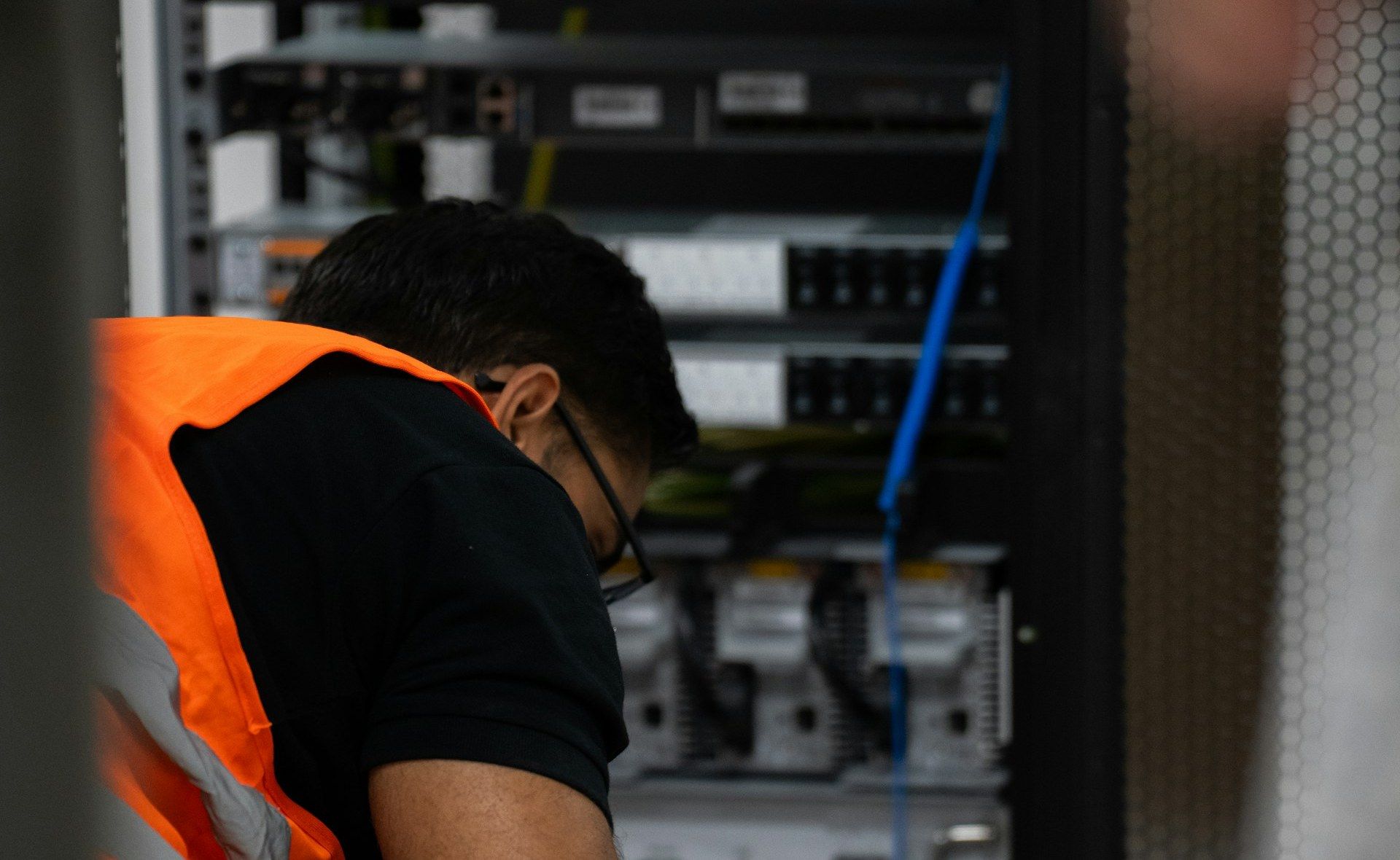 Operational Resilience
The Data Centre Operations Job Changed in 2026. Here Is What Actually Moved.
Denser racks, fewer qualified hands, costlier outages and a verdict on AI: what the 2026 shift in data centre operations looks like from the floor, and why another dashboard will not fix it.
 Data Centers
Why does it take so long to find the equipment behind an alert?
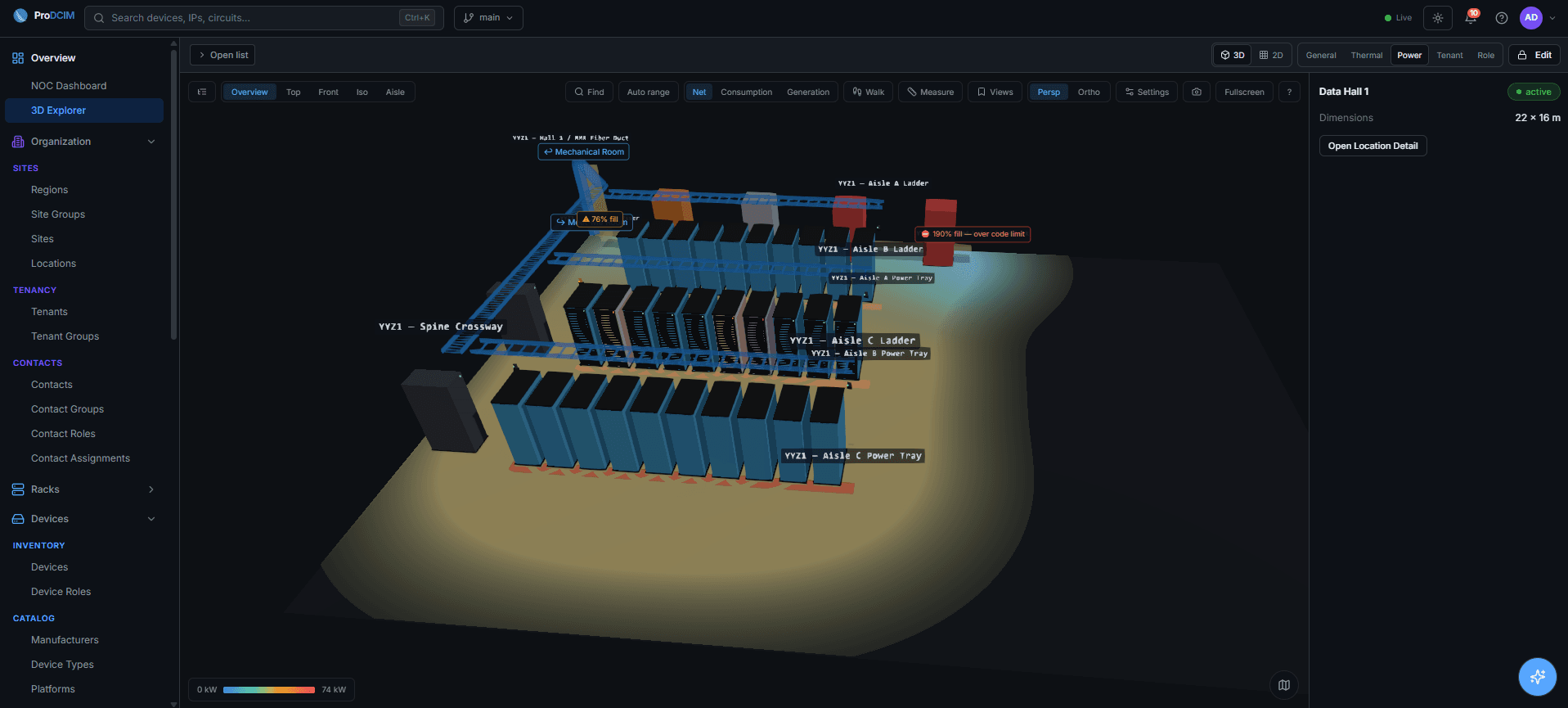
A PDU circuit crossing 80 percent names a circuit, not a device. When the floor plan, the asset register and the power readings live in separate systems, closing that gap is the slowest part of the shift. Here is what changes when they share one model of your infrastructure.
 Data Centers
Racks Are Getting Denser. Confidence in the Data Is Not.
Uptime Institute's 2026 survey shows racks at 50 kW or more rose from 10 to 13 percent in a year, while racks under 10 kW fell from 32 to 25 percent. Over the same period operators reported the least confidence in the completeness of their operational data, which is the property that decides whether you can act on it.
 Data Centers
Liquid Cooling Is Arriving Faster Than the Skills to Run It
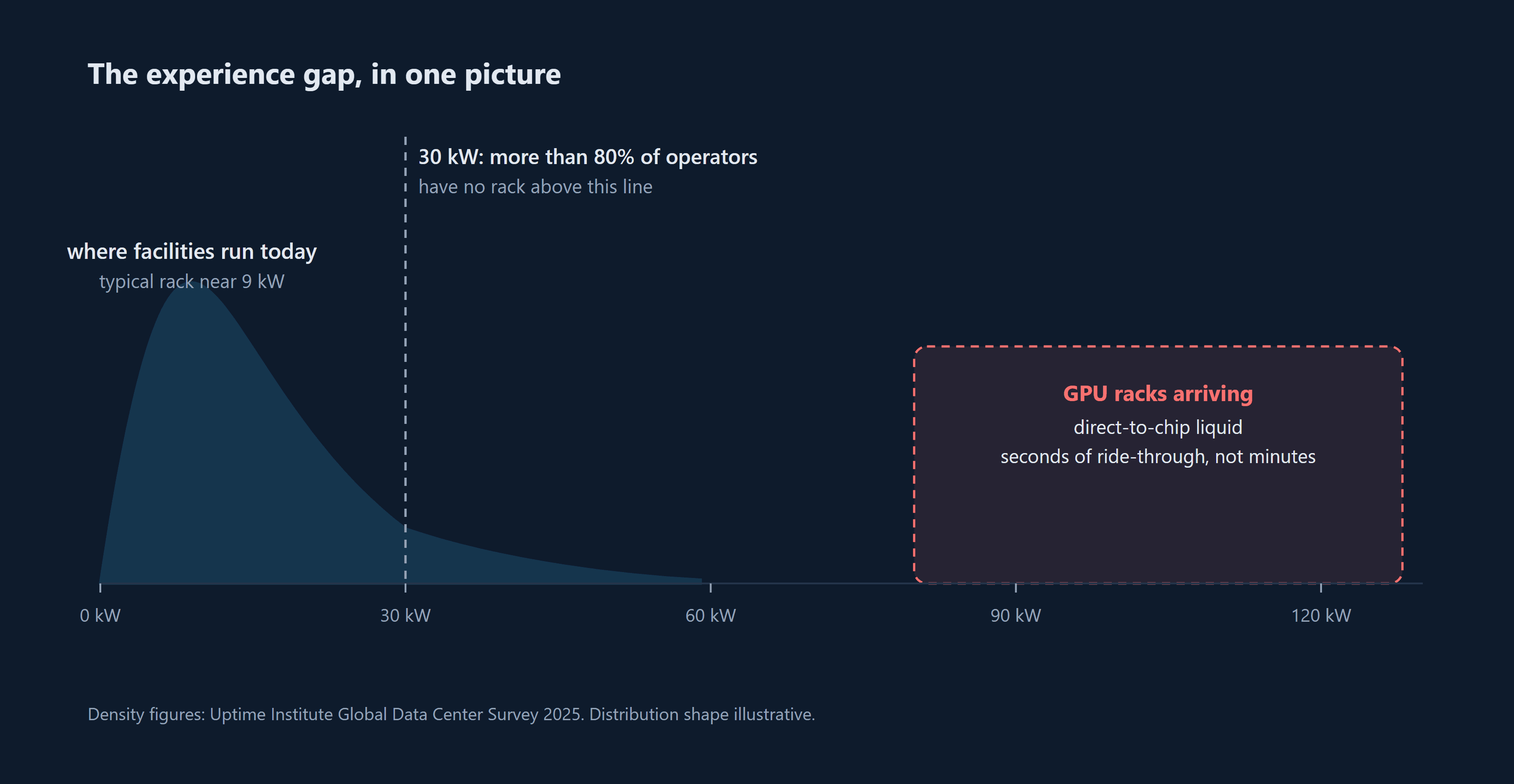
More than 80 percent of operators have never run a rack above 30 kW, and the typical facility rack sits near 9 kW. The GPU loads arriving now run far hotter, on pumped liquid, with seconds of thermal ride-through instead of minutes. The hardware will arrive on schedule. Here is the four week program that gets the team ready before it does.
 Data Centers
Nameplate vs. Reality: How Data Centers Can Reclaim Stranded Power
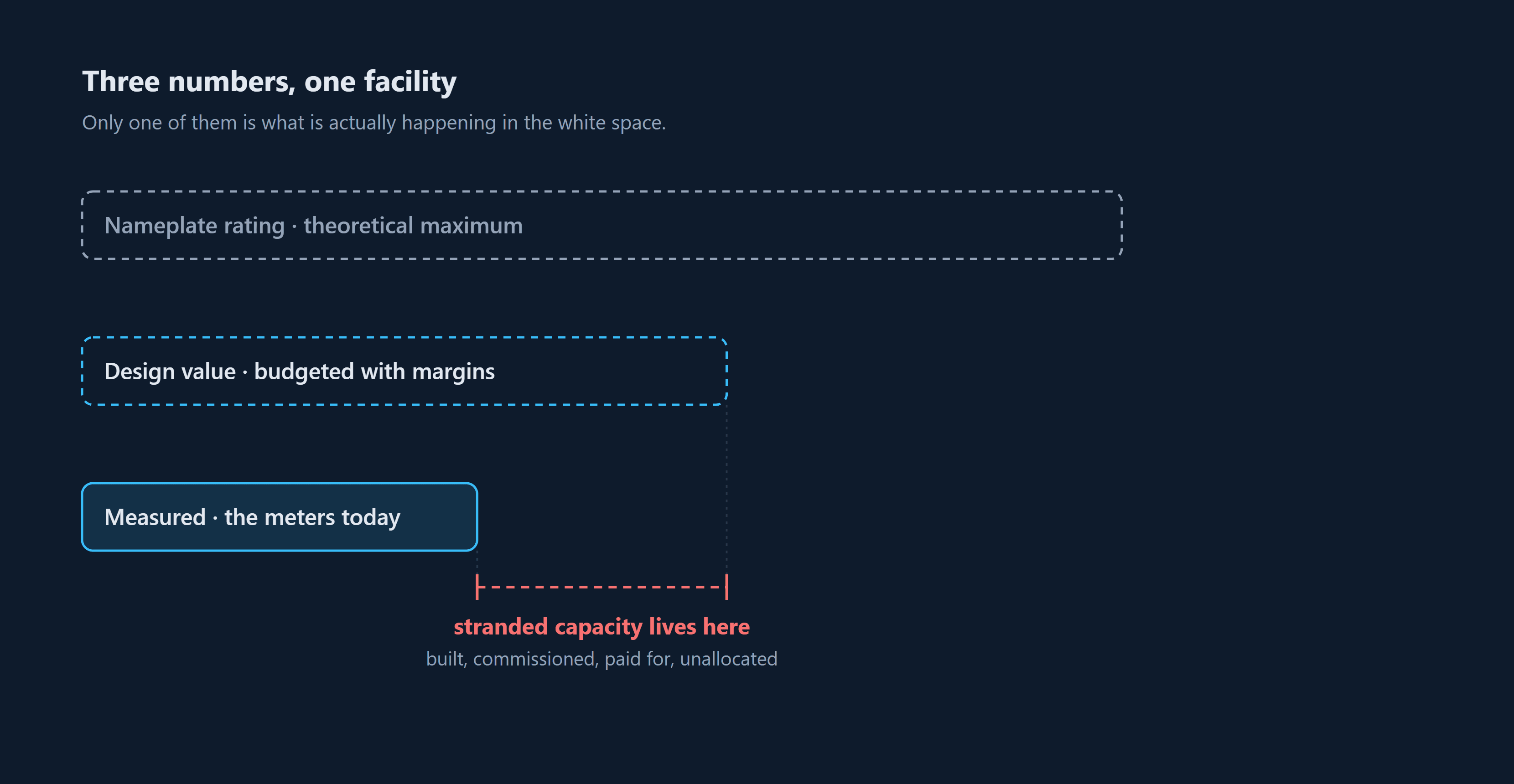
Most data centers have more usable power than their spreadsheets admit. It sits stranded between conservative design assumptions and what the meters actually show. Reclaiming it takes measurement, not retrofits: branch-circuit telemetry, high-percentile planning baselines, and headroom modeled under N-1. Here is the playbook.
 AI Operations
From Noise to Truth: How AI Turns Device Logs into Trusted Operational Intelligence
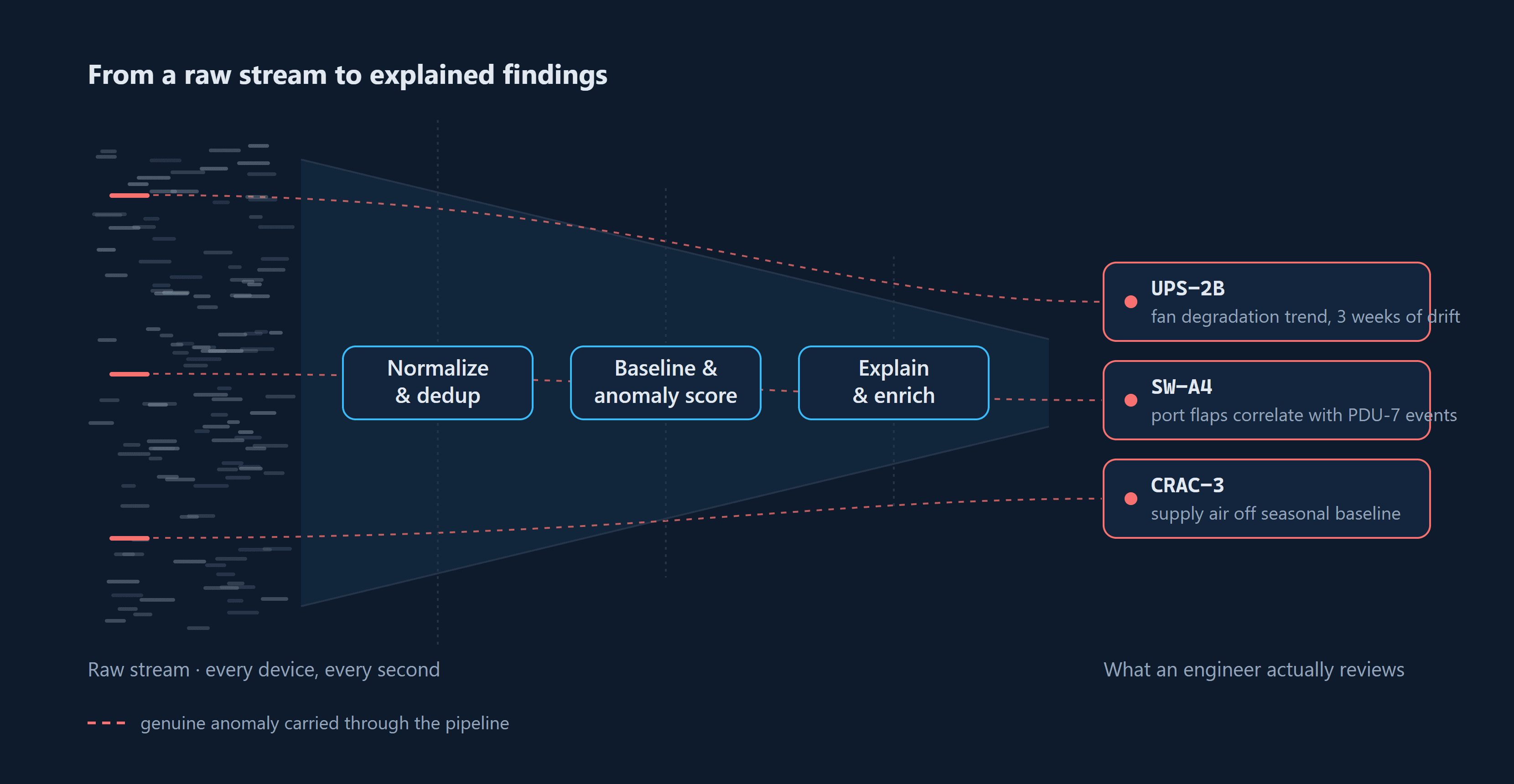
Device logs are the most underused asset in infrastructure operations: written once, read never, and yet the first place every failure announces itself. AI changes that equation. Anomalies surface themselves, cryptic vendor errors arrive translated, and the record becomes strong enough to stand in an audit. Here is how noise becomes truth.
 Data Centers
The Grid Can Now Tell You to Turn Down. Almost Nobody Can Prove They Did.
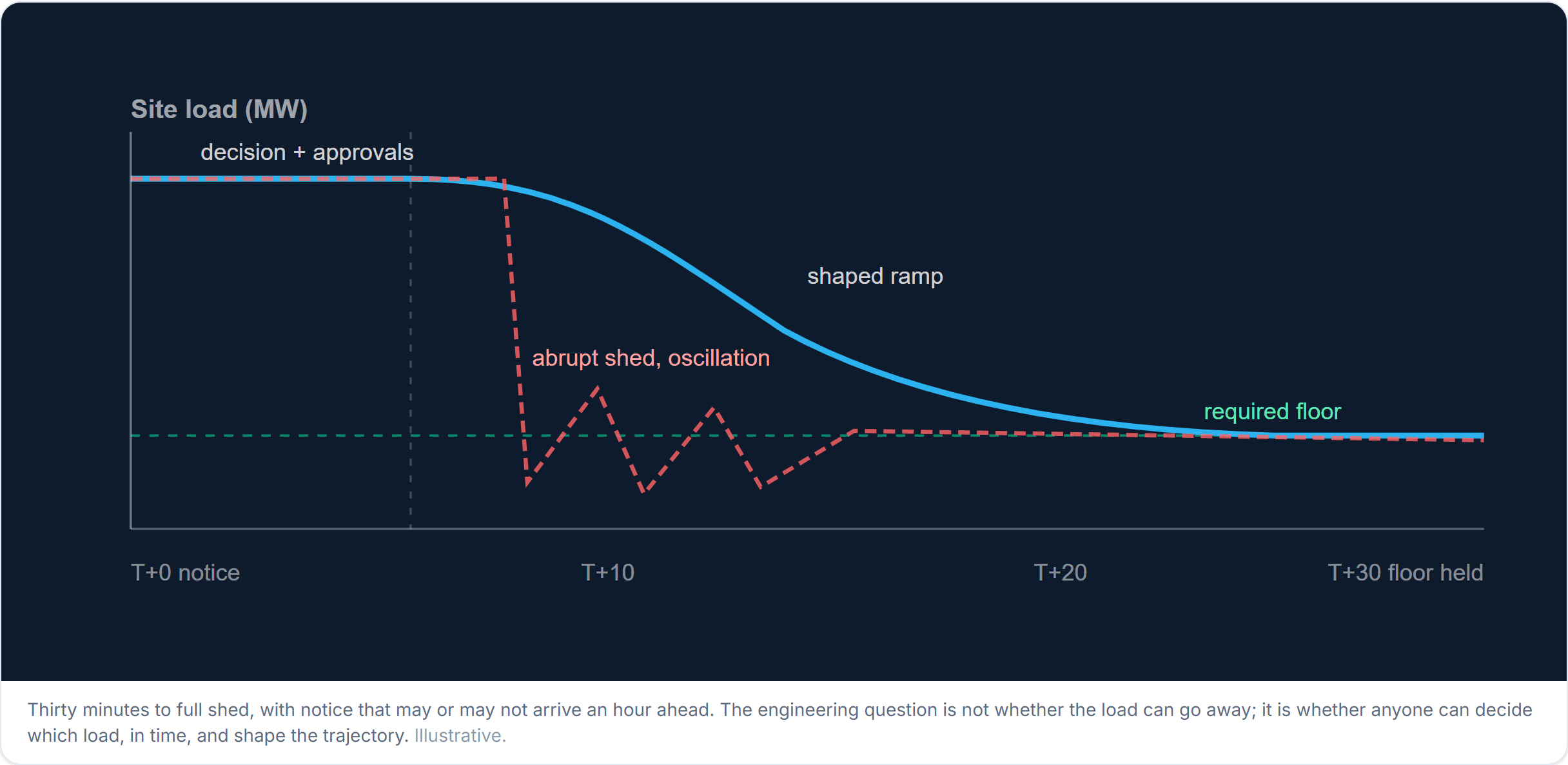
In 2026 curtailment stopped being a favor and became a condition of service: full-load shed inside thirty minutes in Texas, first-to-be-cut status in PJM, a Level 3 alert from NERC. Every one of those is a measurement and attribution problem before it is a power problem.
 AI Operations
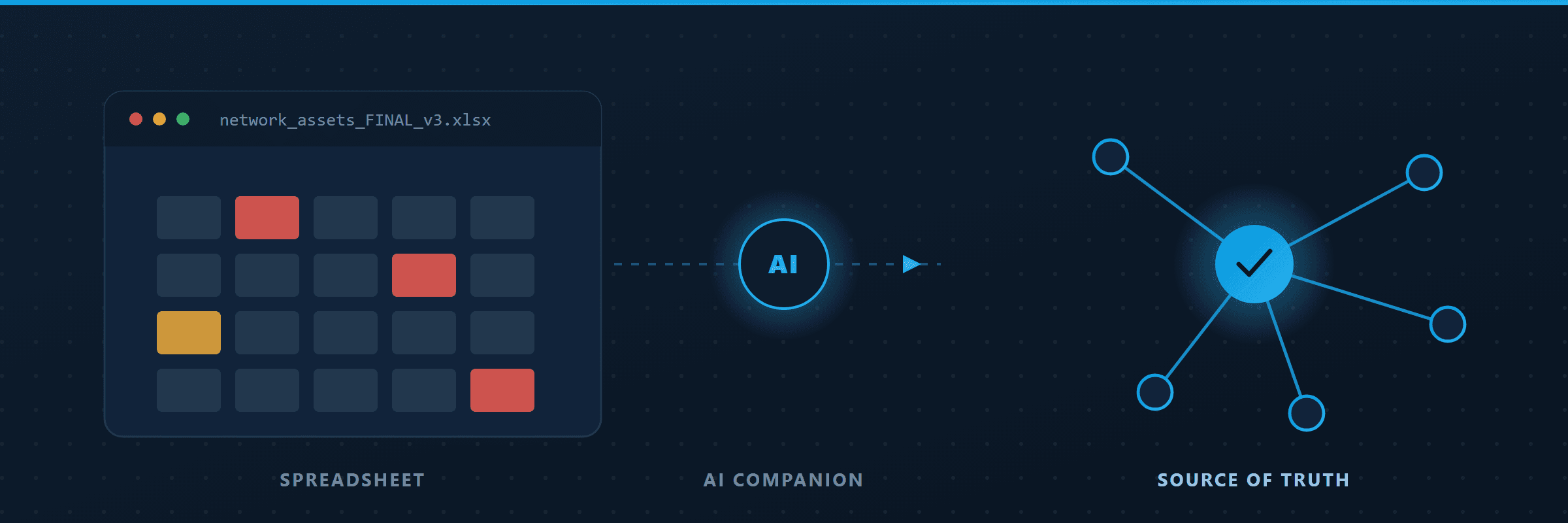
Excel for Your Server Room Is Painful, But a Traditional CMDB Can Hurt More
Your server room probably runs on network_assets_FINAL_v3.xlsx. It works until it does not, and a traditional CMDB can hurt more. Here is why that trade-off finally breaks in the AI era, and what to do instead.
 Operational Resilience
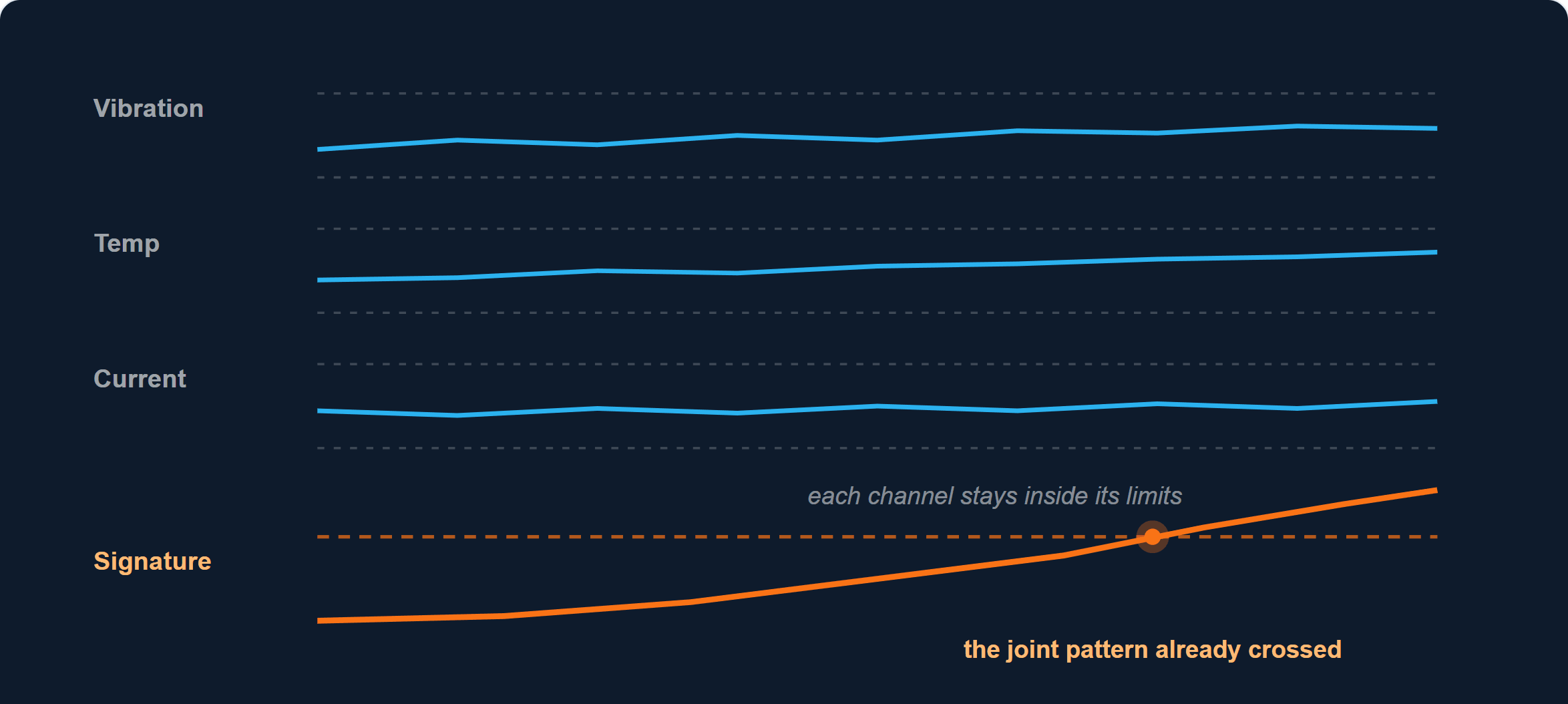
Your Equipment Told You It Was Failing. Nothing Was Listening for the Pattern.
No single parameter exceeded its limit before failure. Every reliability engineer has read that line. The failure was still legible, weeks early, in how several in-range readings moved together. On the P-F curve, condition-based pattern detection buys the lead time a fixed threshold gives away.
 AI Operations
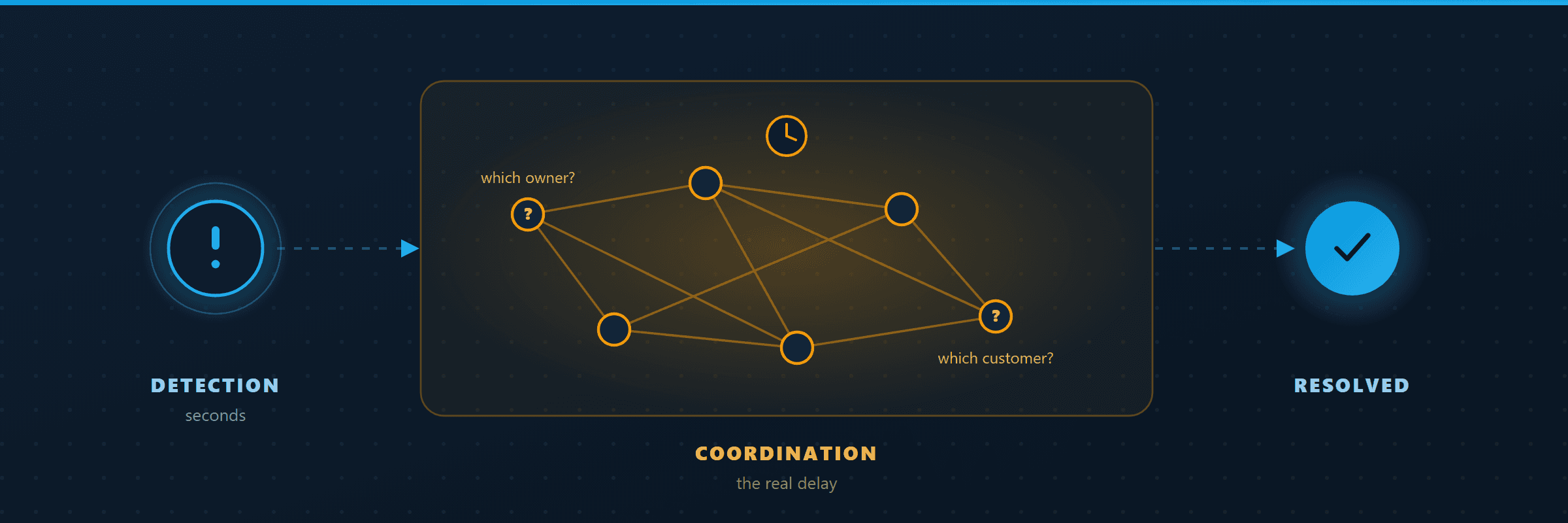
Your Data Center's Hardest Problem Isn't Detection. It's Coordination.
When an incident hits, your monitoring already knows. The real delay is everything that happens next: finding the affected customer, the right owner, the correct procedure, the required approval. ProDCIM AI Employee is built to close that gap.
 Data Centers
The Data Center Went DC. The Model Didn't.
AI racks are dragging power distribution from AC to 400 and 800 volts DC. The single-line drawings, twins, and management tools we plan and protect the plant with were built for a topology on its way out.
 Operational Resilience
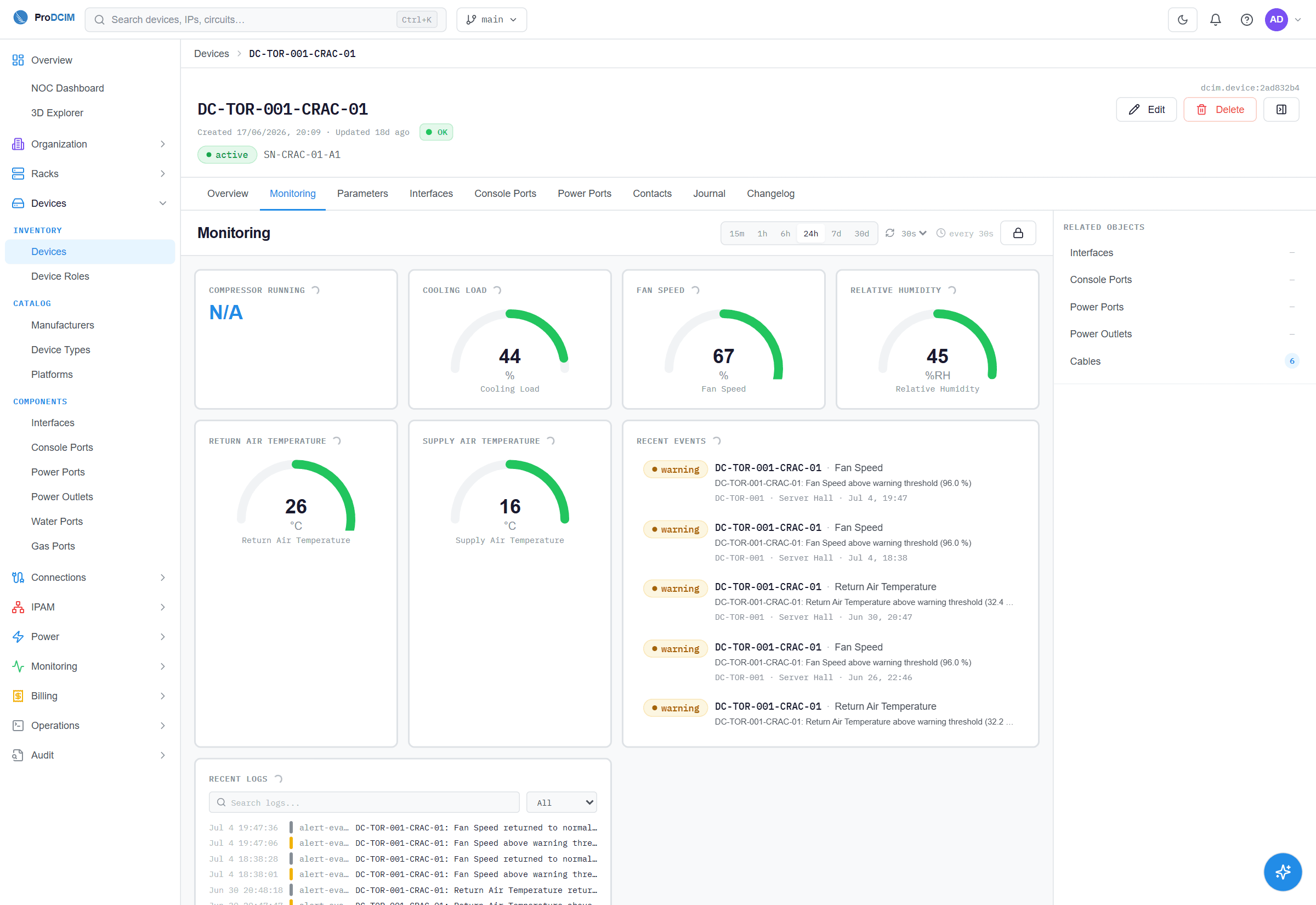
Beyond Static Thresholds: Engineering Reliability in Distributed Thermal Monitoring
Why fixed temperature alarms fail in high-density, distributed sites, and how edge-run statistical anomaly detection catches cooling failures before the heat spike.
 Data Centers
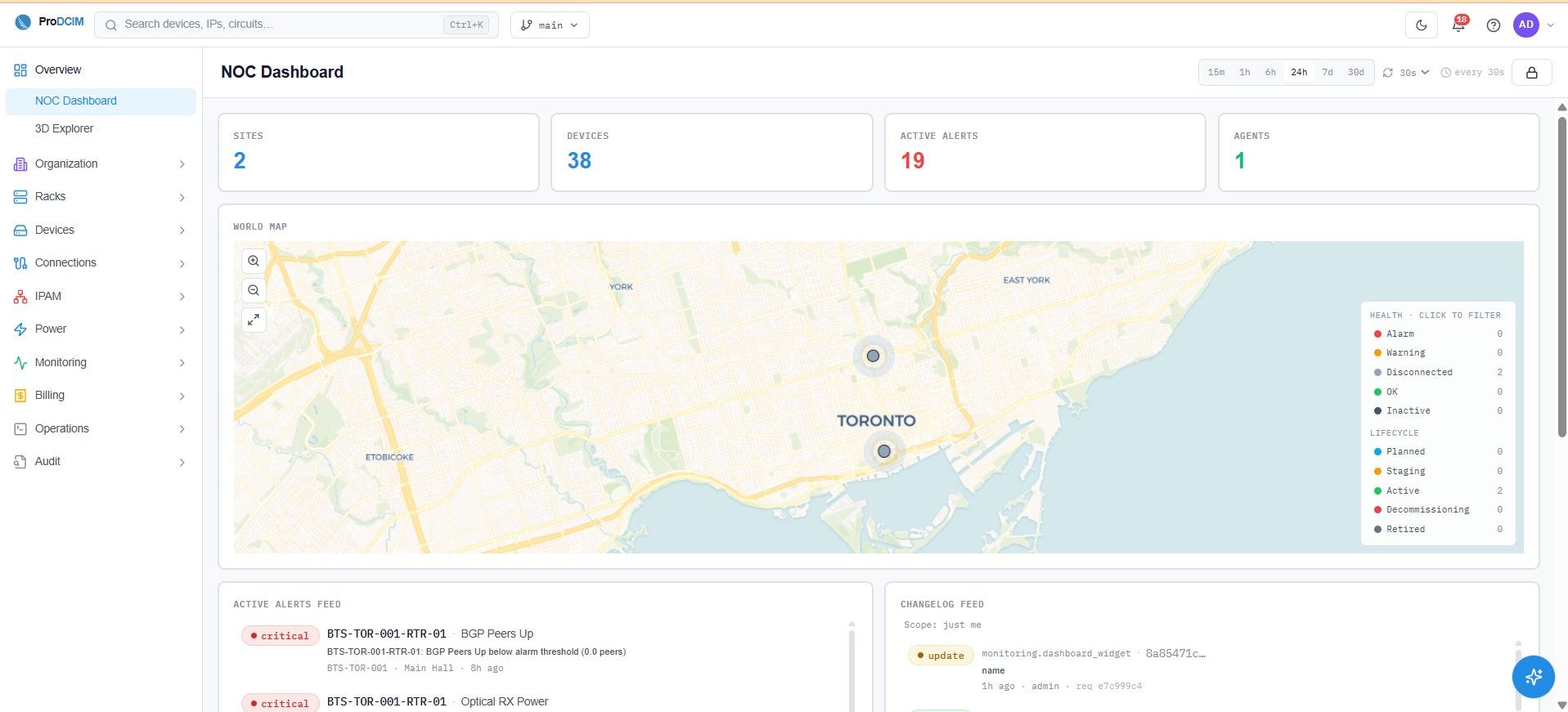
The Unified ProDCIM Asset Database: One Source of Truth for Your Whole Estate
Your inventory lives in spreadsheets, vendor consoles, and people's heads, and none of them agree. The Unified ProDCIM asset database replaces that patchwork with one authoritative, live record of every site, rack, device, IP, and circuit you run.
 AI Operations
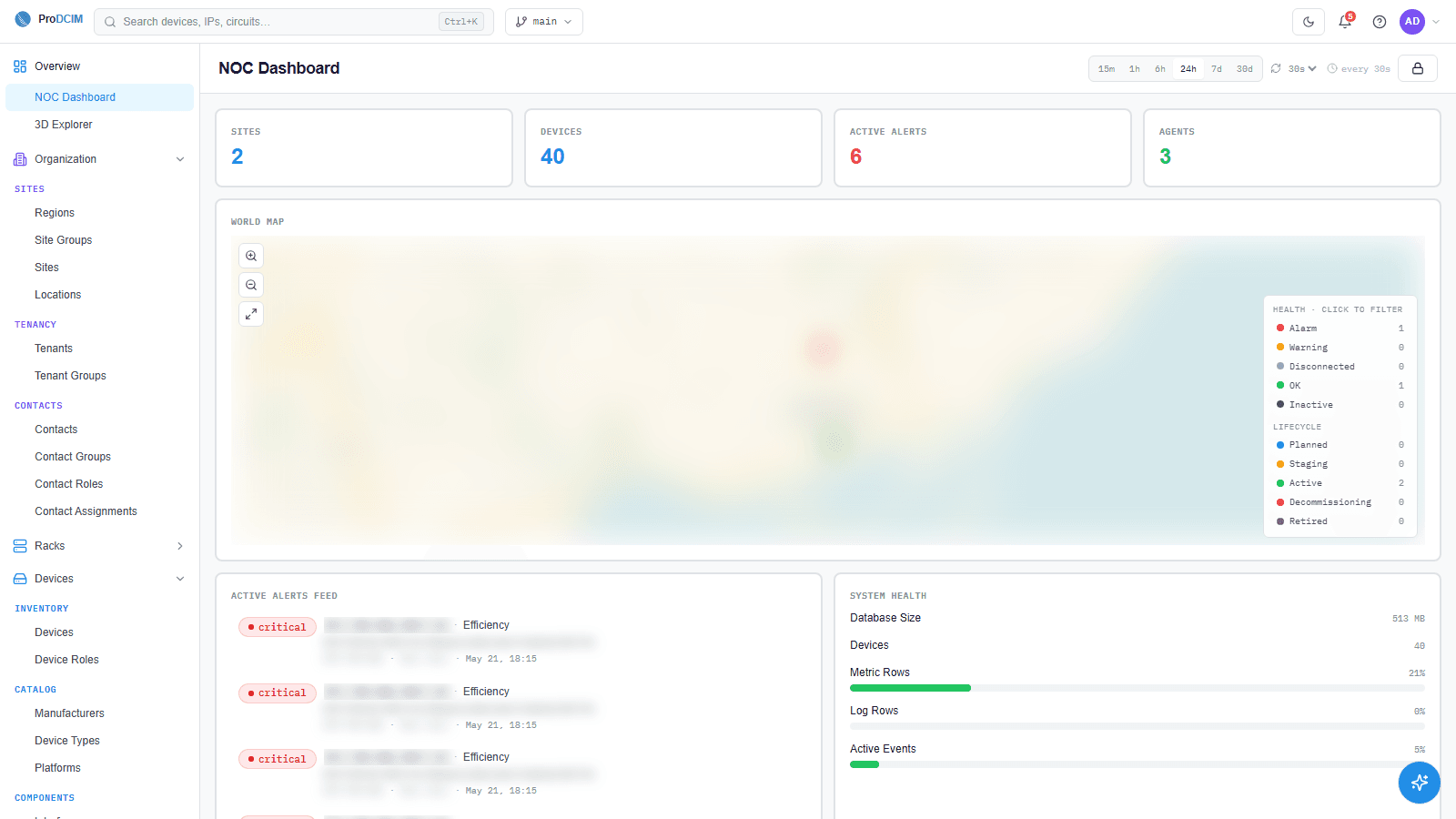
AI-Assisted DCIM in 2026: From Dashboards to Decisions
For a decade, DCIM meant dashboards, more screens, more graphs, more alarms to ignore. In 2026 the shift is from showing data to *acting* on it: anomaly detection that cuts alarm noise, capacity forecasting, and an AI companion that builds your asset database for you. Here's what "AI-assisted" actually means, and what to ignore.
 Operational Resilience
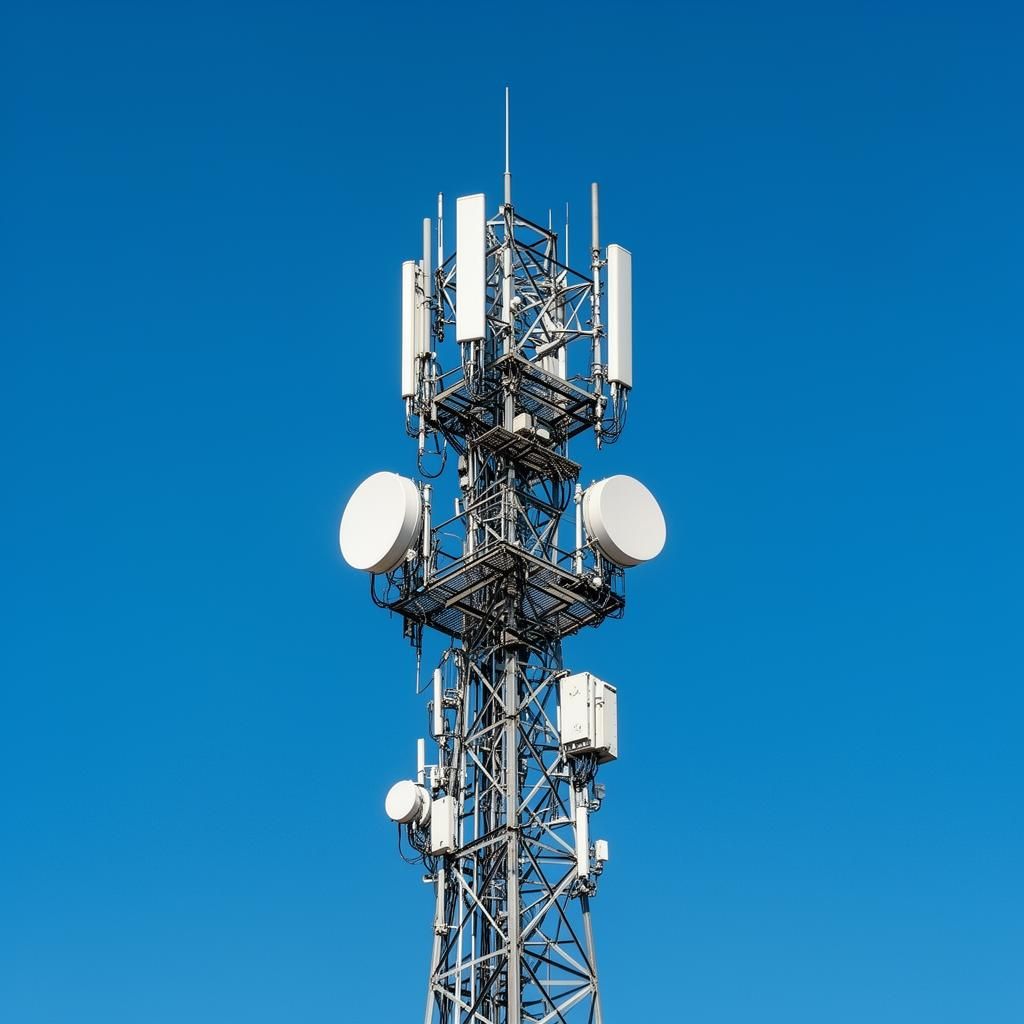
When the Link Dies: Why Out-of-Band Access Is the Missing Half of Monitoring
Every monitoring tool dies with the link it rides on, which means you lose visibility at the exact moment a site goes down. Out-of-band access is the missing half: a separate path home that survives the outage it's reporting. Here's how it works, what good looks like, and why it pays for itself in avoided truck rolls.
 Telecom
Monitoring Sites You'll Never Visit: A Field Guide to Distributed Infrastructure
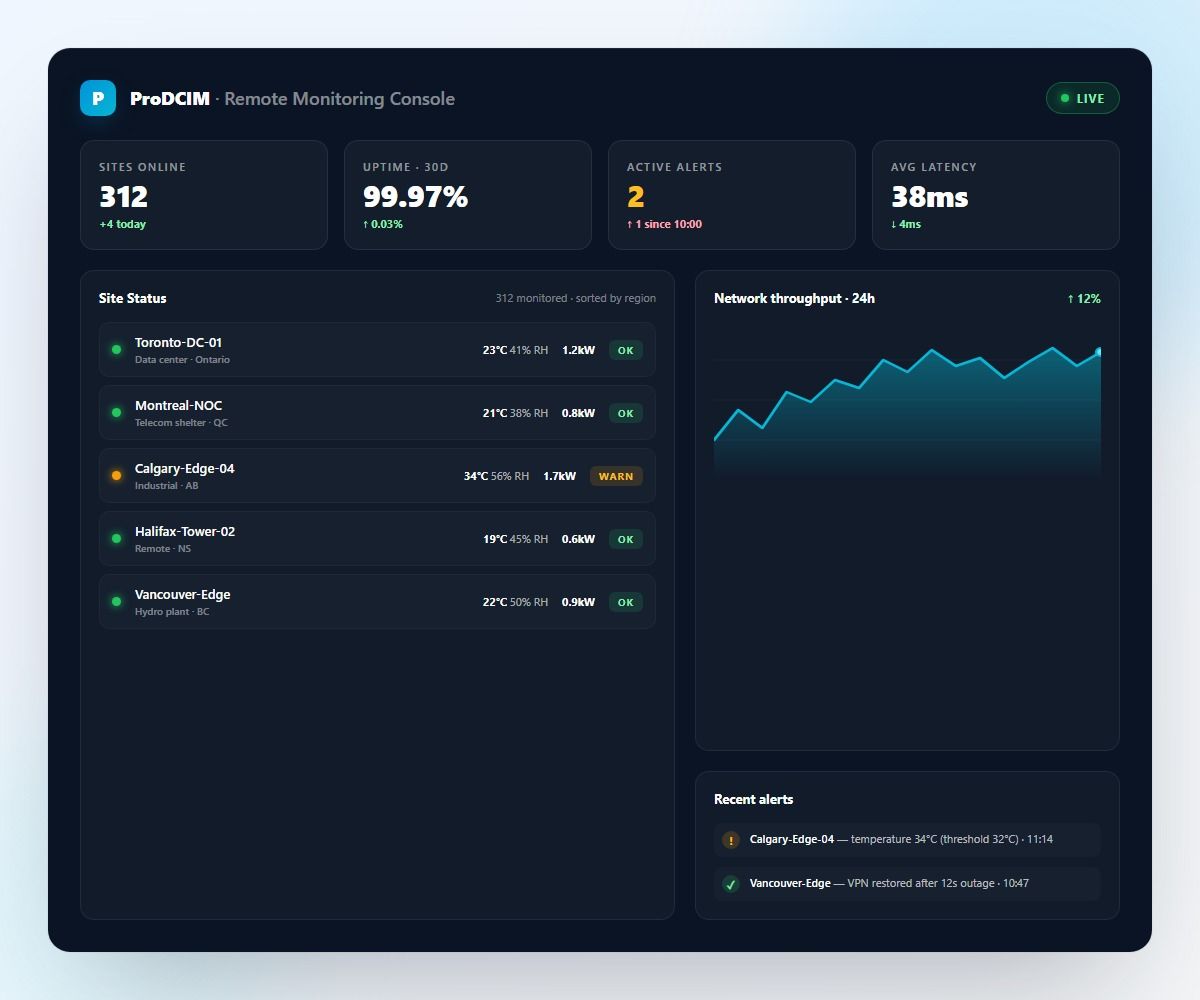
Telecom huts, solar farms, substations, micro data centers, edge cabinets, modern infrastructure is spreading out, and most of it has no one on site. Monitoring an estate you'll rarely visit is a different discipline from running one big room. Here's a field guide to doing it well.
 Open Protocols
No More Silos: Open-Protocol Integration for Infrastructure That Talks
Every closed system is a future migration you haven't scheduled yet. The way out of vendor lock-in isn't one mega-tool, it's open protocols and a unified model: SNMP, Modbus, BACnet, MQTT, REST and webhooks, normalized into one source of truth. Here's how to stop paying the integration tax.