
Racks Are Getting Denser. Confidence in the Data Is Not.
Uptime Institute's 2026 survey shows racks at 50 kW or more rose from 10 to 13 percent in a year, while racks under 10 kW fell from 32 to 25 percent. Over the same period operators reported the least confidence in the completeness of their operational data, which is the property that decides whether you can act on it.
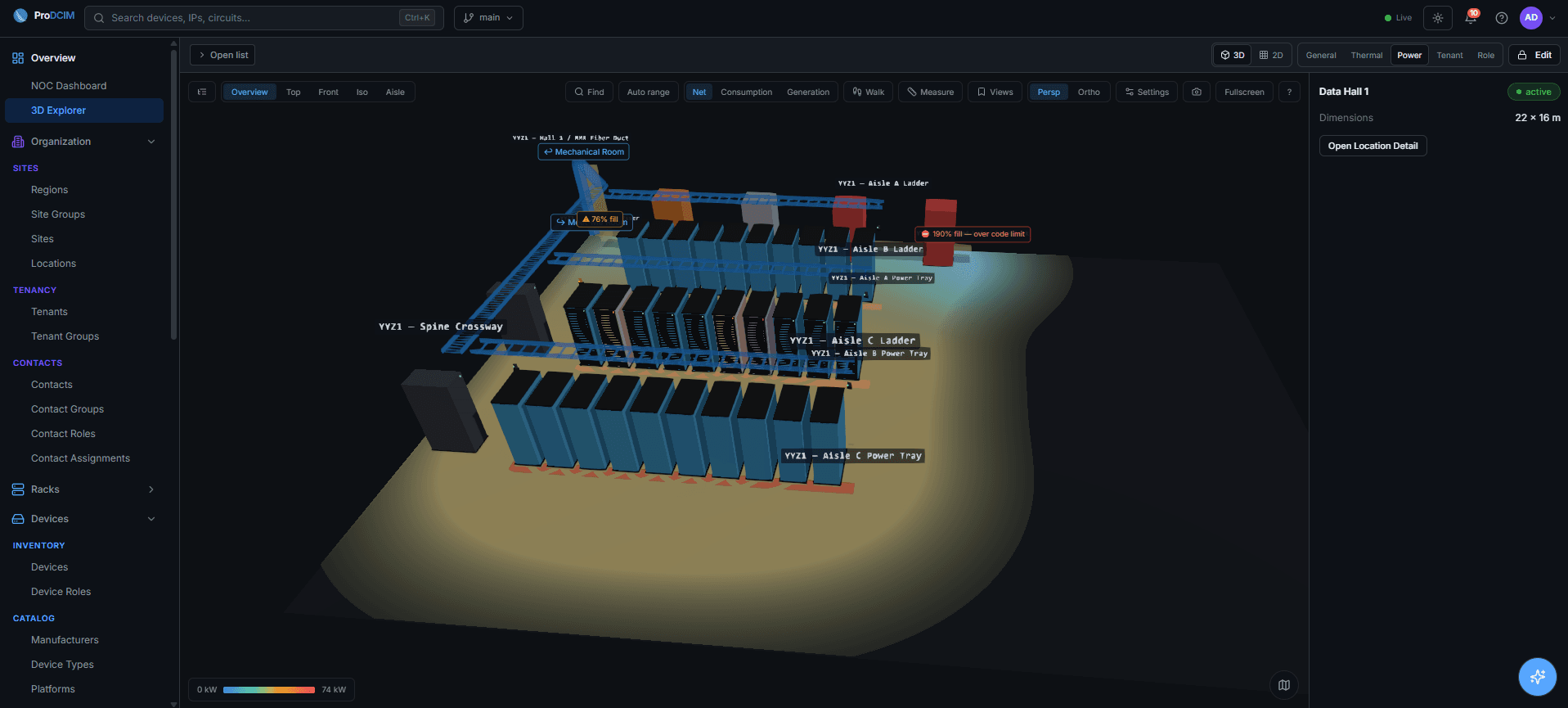
What did the 2026 survey actually find?
Two findings, printed in the same document, that belong next to each other.
Density moved. In Uptime Institute's 2026 Global Data Center Survey, the share of operators whose highest deployed rack density sits under 10 kW fell from 32 percent to 25 percent in a single year. Racks at 50 kW or more rose from 10 percent to 13 percent, and the 20 to 49 kW band grew from 22 percent to 26 percent. The seven points that left the under-10 kW band show up almost entirely above 20 kW.
Confidence did not move with it. Asked how confident they were in the quality of operational data collected from their own sensors, software and equipment, 45 percent said they were very confident in its accuracy. Only 35 percent said the same about its completeness. The share who were not confident at all doubled across that same span, from 7 percent on accuracy to 14 percent on completeness.
Read together: operators trust their readings more than they trust their coverage. And coverage is the property that decides whether you can act.
Why does completeness matter more as density rises?
Because a blind spot changes category as the load behind it grows.
At 5 kW a rack that is not instrumented is a gap in a report. Air has enough thermal mass around it that a problem announces itself slowly, and somebody walking the floor will probably notice before it matters.
At 50 kW that same uninstrumented rack is a thermal event with a fuse measured in minutes. Airflow failures at that density do not give you the afternoon. The margin that used to absorb missing data has been engineered out of the room, which means the missing data is now the exposure.
This is the part worth sitting with. Nothing about the sensor got worse. The 2026 numbers show accuracy holding up: 45 percent very confident, only 7 percent not confident. What changed is what sits behind the sensors you never installed, and what the survey shows is that operators know it. The confidence curve falls in exactly the order you would expect from people describing coverage rather than calibration: accuracy 45 percent, timeliness 43 percent, fitness for operational decisions 39 percent, completeness 35 percent.
How fast is this actually arriving?
Faster than a refresh cycle, which is the timeline that matters.
In the same report, 52 percent of operators said they had built or upgraded data hall space dedicated to high-density IT in the past 12 months, and 70 percent said they plan to in the next 12. Enterprise applications, not AI training, were the top driver at 59 percent. Total provisioned IT capacity has been climbing alongside it: facilities at 30 MW or more have doubled from 12 percent in 2023 to 24 percent in 2026.
Against that, a third of respondents refresh servers every three years or less, and 18 percent stretch to six years or more. Monitoring coverage planned around the racks you had when the last refresh landed will be describing a room that no longer exists.
We wrote in Liquid Cooling Is Arriving Faster Than the Skills to Run It that the experience base for high density did not exist yet in most rooms because the load had not arrived in most rooms. The 2026 figures are the load arriving.
What does "complete" actually mean at the rack?
Completeness is not more dashboards. It is the absence of places where a question cannot be answered.
In the deployments our engineers work through, the gaps that matter are consistent and unglamorous:
- Branch circuit, not just the PDU. A rack total hides the phase imbalance that trips a breaker at 40 kW. Per-outlet or per-branch measurement is what turns a nameplate argument into a measurement.
- Inlet temperature per rack, at height. One sensor per row describes the row. At high density the top and bottom of the same cabinet are different rooms.
- Differential pressure and flow where liquid is involved. A pumped loop that is only monitored at the CDU tells you the plant is fine while a manifold starves.
- The devices themselves. Servers, PDUs, UPS and cooling units already publish far more over SNMP, Modbus and Redfish than most sites collect. Coverage often means reading what the estate already reports, not buying new hardware.
- Asset records down to the port. "Which circuit feeds this thing" is an operational question at 3 a.m., not a documentation question. If it lives in a spreadsheet, it is not part of your operational data.
None of that is exotic. It is the difference between a system that reports and a system you can decide from, which is precisely the distinction the survey's four questions were separating.
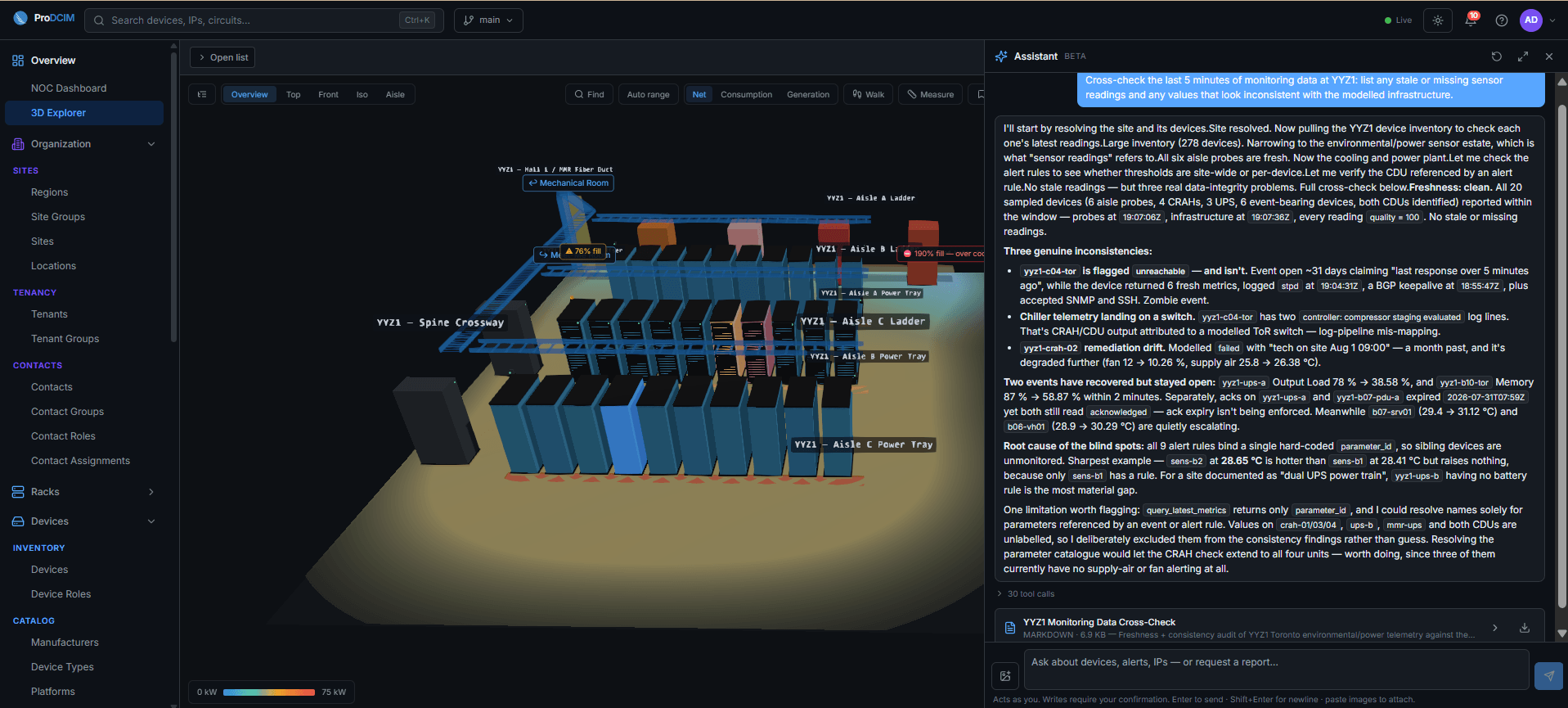
Accuracy is not usually the failure. This cross-check reports every sampled device fresh and every reading at full quality, then finds the real gap: alert rules bound to one hard-coded device, leaving its siblings unwatched, including a UPS on a site documented as a dual power train.
Where should a team start?
Start by testing coverage rather than adding it.
Take the three highest-density racks in the room. For each, write down what you would need to know to decide whether to pull load at 2 a.m.: inlet temperature at the top of the cabinet, per-branch current, upstream feed and its redundancy state, and what else shares that circuit. Then check how much of it your monitoring can answer right now, without a site visit and without opening a spreadsheet.
Whatever you cannot answer is your completeness gap, and it is measured in racks, not percentages. Most teams find it is smaller than they feared and more concentrated than they expected, usually clustered in the equipment installed most recently, which is also the densest.
That exercise costs an afternoon. It is worth doing before the next high-density build lands, because 70 percent of the operators in this survey have one coming inside a year.
The short version
Rack density rose measurably between 2025 and 2026, with the biggest movement out of the under-10 kW band and into 20 kW and above. Over the same period, operators reported the least confidence in the completeness of their operational data, and the most in its raw accuracy. Those two facts describe a widening gap between how much a rack can hurt you and how much you can see of it.
The instrumentation problem is not accuracy. It is coverage, and density is what turns coverage from a reporting concern into an operational one.
Source: Uptime Institute, "Data Center Capacity Growth Trends: Findings from the 2026 Global Data Center Survey", August 2026. The survey ran from March 17 to May 1, 2026 with 1,635 respondents; this report draws on 801 data center owner and operator respondents. Figures cited here are from question VI (highest server rack density deployed, 2025 n=709, 2026 n=676) and question VIII (confidence in operational data quality, n=610).
See it on your own racks
Book a walkthrough mapped to your environment: monitoring, asset management and out-of-band resilience across every site.
More insights
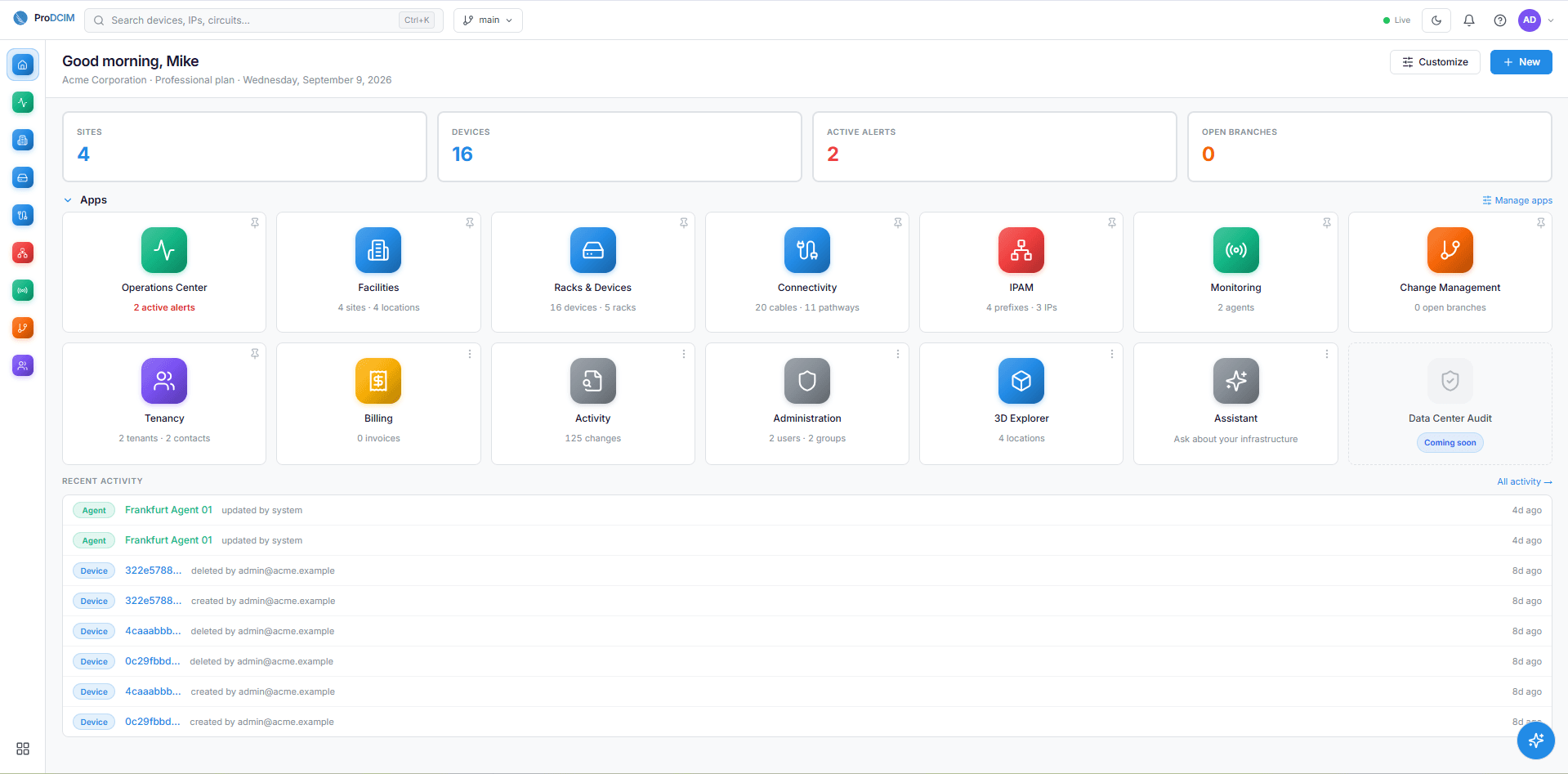
Why does it take so long to find the equipment behind an alert?
A PDU circuit crossing 80 percent names a circuit, not a device. When the floor plan, the asset register and the power readings live in separate systems, closing that gap is the slowest part of the shift. Here is what changes when they share one model of your infrastructure.
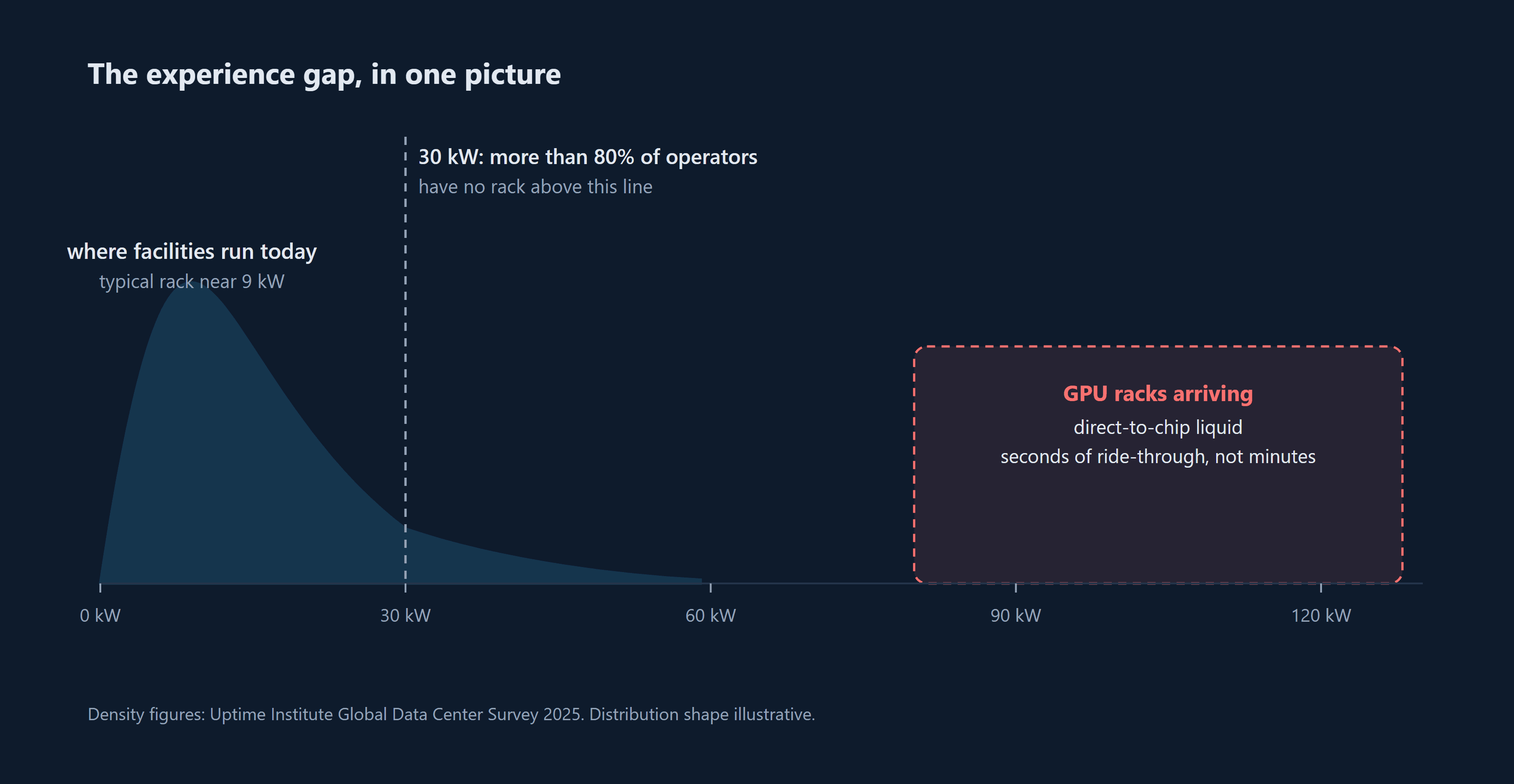
Liquid Cooling Is Arriving Faster Than the Skills to Run It
More than 80 percent of operators have never run a rack above 30 kW, and the typical facility rack sits near 9 kW. The GPU loads arriving now run far hotter, on pumped liquid, with seconds of thermal ride-through instead of minutes. The hardware will arrive on schedule. Here is the four week program that gets the team ready before it does.
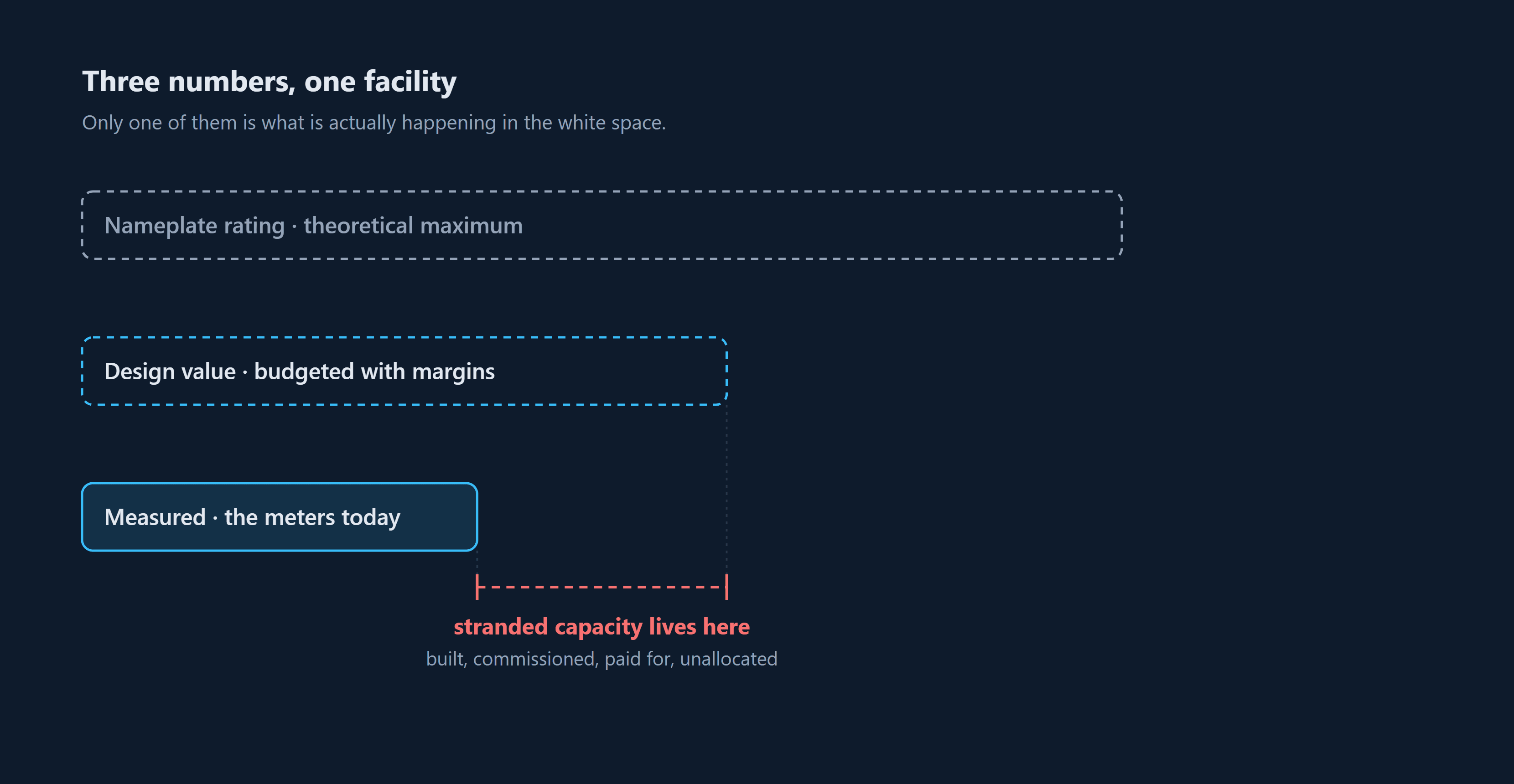
Nameplate vs. Reality: How Data Centers Can Reclaim Stranded Power
Most data centers have more usable power than their spreadsheets admit. It sits stranded between conservative design assumptions and what the meters actually show. Reclaiming it takes measurement, not retrofits: branch-circuit telemetry, high-percentile planning baselines, and headroom modeled under N-1. Here is the playbook.