
TIA Releases First Draft of DCE 9000, the Data Center Quality Standard: What Operators Should Know
TIA has released the first draft of DCE 9000, a certifiable quality management standard for data center infrastructure. As a TIA member, Prochista explains what the standard covers, the timeline to final publication in early 2027, and how operators can prepare.
The Telecommunications Industry Association (TIA) has released the first draft of DCE 9000, the Data Center Quality Management System Standard. It is designed to give operators, suppliers and contractors one certifiable quality benchmark across the data center infrastructure lifecycle, replacing the patchwork of proprietary vendor checklists in use today. The draft is now in formal review, and TIA says the final standard is on track for publication in the first quarter of 2027.
Prochista Smart Technologies is a member of TIA, and we are following DCE 9000 closely because it touches the same ground our customers work on every day: how infrastructure is built, changed, monitored and proven reliable.
What is DCE 9000?
DCE 9000 is a quality management system standard written specifically for data center infrastructure. According to TIA's announcement of October 14, 2026, it aims to replace fragmented, proprietary vendor checklists with a shared approach to quality that aligns operators, suppliers and general contractors.
It speaks to two audiences:
- Owners and operators get a structured, certifiable way to manage quality, reliability and continuous improvement.
- Manufacturers, suppliers and service providers get common quality requirements and an independent way to demonstrate that they meet them.
The standard is being developed by the TIA QuEST Forum DCE 9000 Working Group. TIA reports that 78 organizations, a total of 191 participants, are contributing, and that the initiative went from launch to first draft in nine months. Supporting material is also in development, including measurement guidelines, certification requirements, auditor competencies and training programs.
Why does the data center industry need its own quality standard?
Data center construction is moving faster than ever, and every build involves dozens of suppliers and contractors, each with its own definition of quality. When those definitions differ, gaps appear at the handover points: between design and construction, between commissioning and operations, and between one vendor's equipment and the next.
A shared, auditable standard gives everyone the same yardstick. As Gino Tozzi, Global Head of Data Center Infrastructure Quality at Google and Chair of the DCE Technical Committee, put it: "DCE 9000 is an important and transformational initiative for the data center industry."
What happens next?
- Formal review: the draft is being reviewed by participating organizations, and proposed changes go through a formal change-control process.
- Comments: TIA has asked for feedback by November 30, 2026.
- Final standard: publication is expected in Q1 2027, alongside certification requirements and training.
Organizations that want to take part can find details on TIA's DCE 9000 program page or contact TIA at membership@tiaonline.org.
How can operators prepare now?
A certifiable quality standard rewards organizations that can show, with records, how their infrastructure is managed. Even before the final text is published, operators can start with the basics:
- 1Know what you have. An accurate, current inventory of assets, connections and capacity is the foundation of any quality audit.
- 2Control and record change. Planned changes, approvals and the work actually done should leave a clear trail.
- 3Measure continuously. Monitoring data on power, cooling and environmental conditions turns "we believe it is reliable" into evidence.
- 4Close the loop. Incidents and alarms should feed back into how sites are designed and run.
This is the kind of operational record that ProDCIM is built to keep, from asset and change management to live monitoring, and we will share more as the DCE 9000 requirements are finalized.
Sources: TIA press release, October 14, 2026; TIA DCE 9000 program page.
See it on your own racks
Book a walkthrough mapped to your environment: monitoring, asset management and out-of-band resilience across every site.
More insights
Why does it take so long to find the equipment behind an alert?
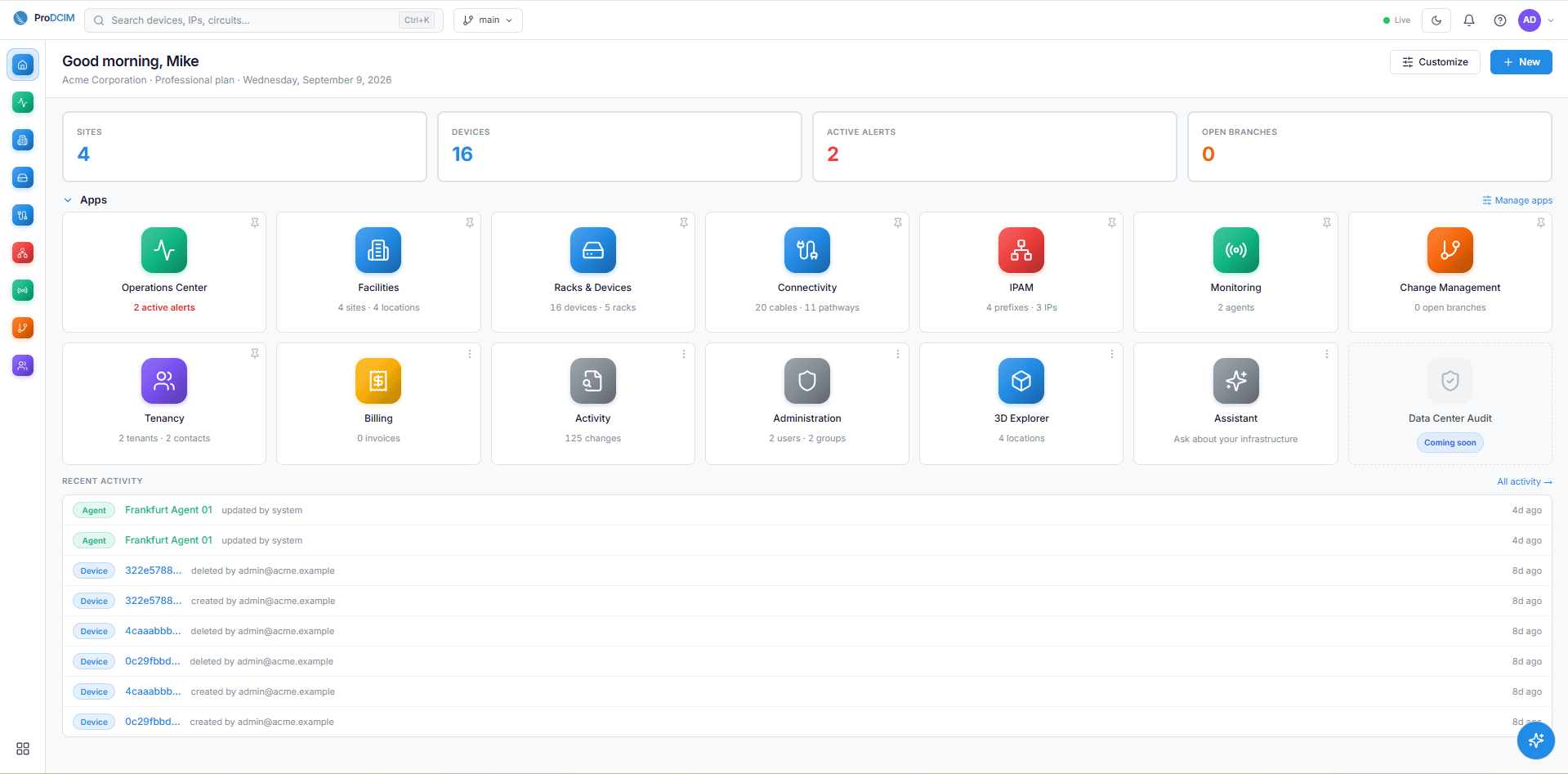
A PDU circuit crossing 80 percent names a circuit, not a device. When the floor plan, the asset register and the power readings live in separate systems, closing that gap is the slowest part of the shift. Here is what changes when they share one model of your infrastructure.
Racks Are Getting Denser. Confidence in the Data Is Not.
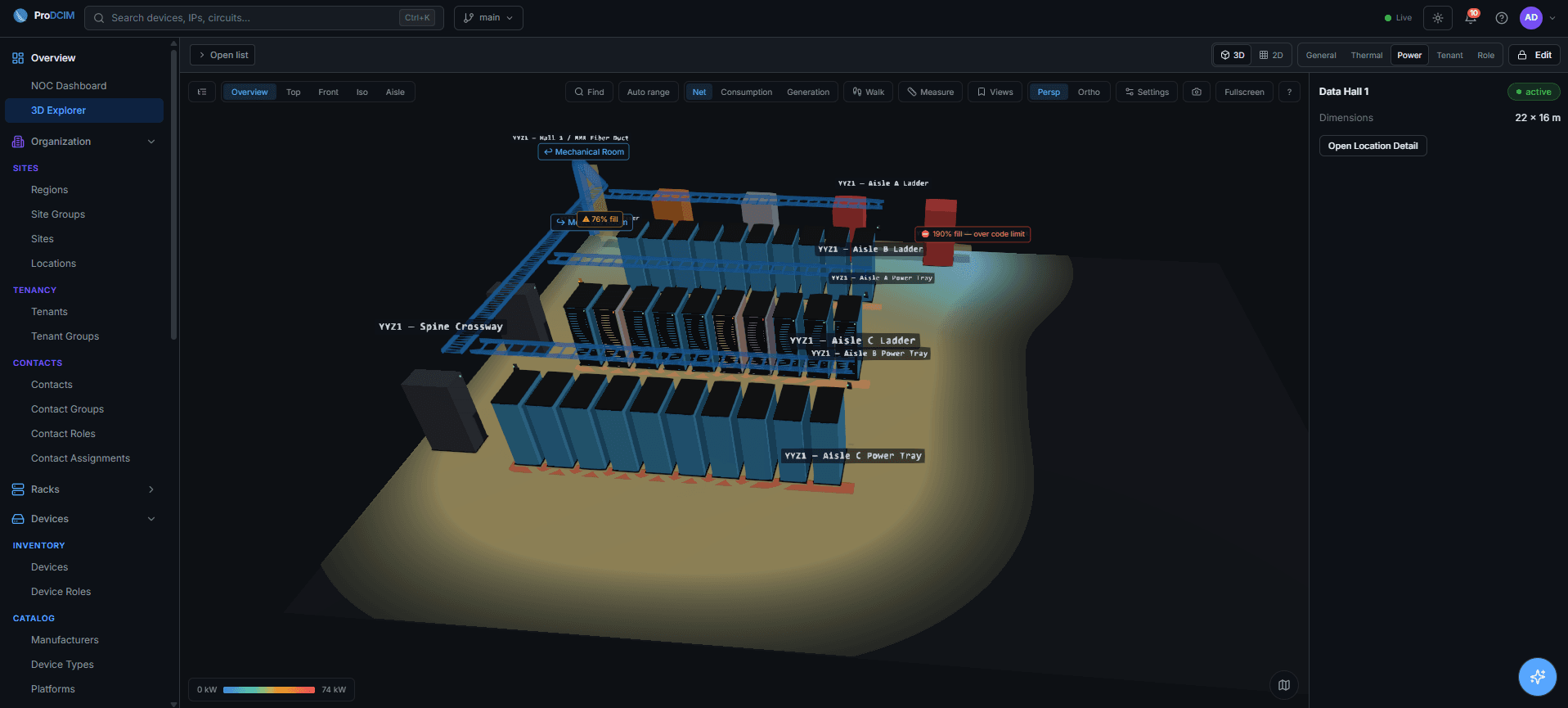
Uptime Institute's 2026 survey shows racks at 50 kW or more rose from 10 to 13 percent in a year, while racks under 10 kW fell from 32 to 25 percent. Over the same period operators reported the least confidence in the completeness of their operational data, which is the property that decides whether you can act on it.
Liquid Cooling Is Arriving Faster Than the Skills to Run It
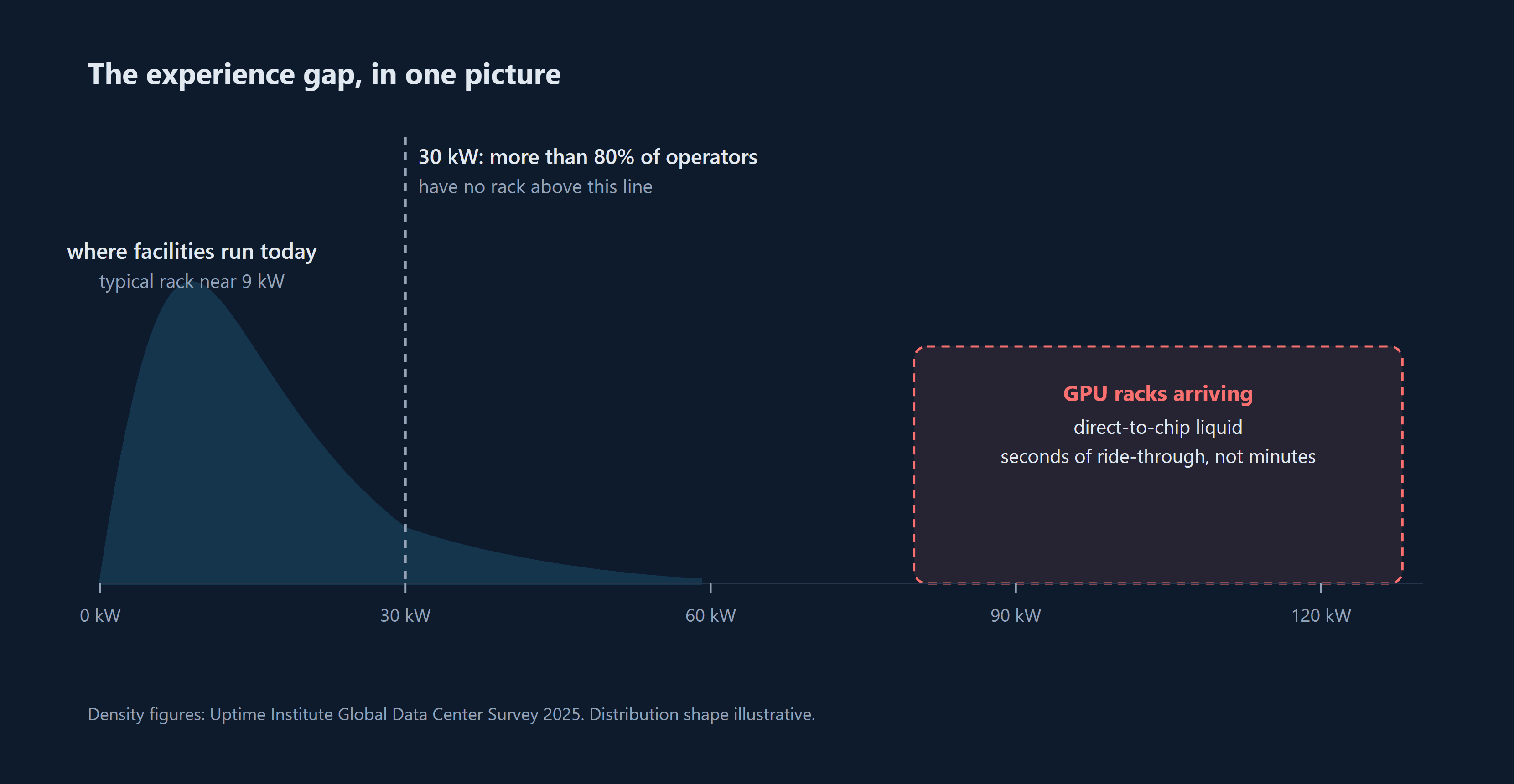
More than 80 percent of operators have never run a rack above 30 kW, and the typical facility rack sits near 9 kW. The GPU loads arriving now run far hotter, on pumped liquid, with seconds of thermal ride-through instead of minutes. The hardware will arrive on schedule. Here is the four week program that gets the team ready before it does.